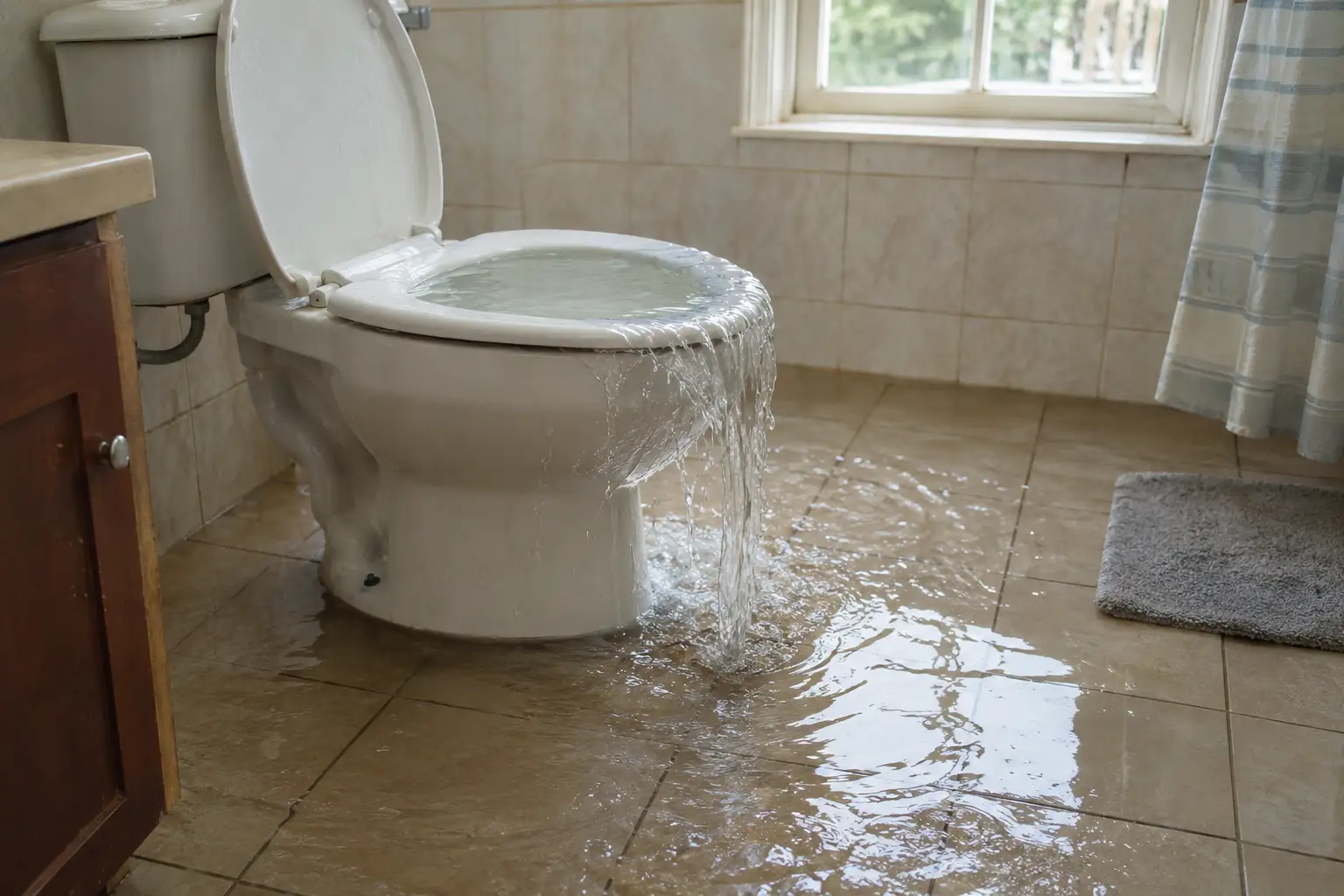
Knowing what to do when a toilet overflows turns a panic into a five minute job. Stop the water first, then deal with the clog, then clean up. This guide for Cheyenne homeowners covers each step, the habits that spread the mess, and the signs that the real problem sits deeper in the drain line than the toilet itself.
Stop the water in the first ten seconds
The short answer
Take the lid off the tank and push the float up, or press the flapper shut. Then close the oval stop valve behind the toilet by turning it clockwise. Once the water stops rising, let the bowl drop a little before you plunge, and keep towels down until it drains.
Lift the float
The float is the ball or cup that rises with the water in the tank. Holding it up tells the fill valve to stop sending more water.
Close the flapper
Reach into the tank and press the rubber flapper down over the hole at the bottom. That keeps the tank water from rushing into the bowl.
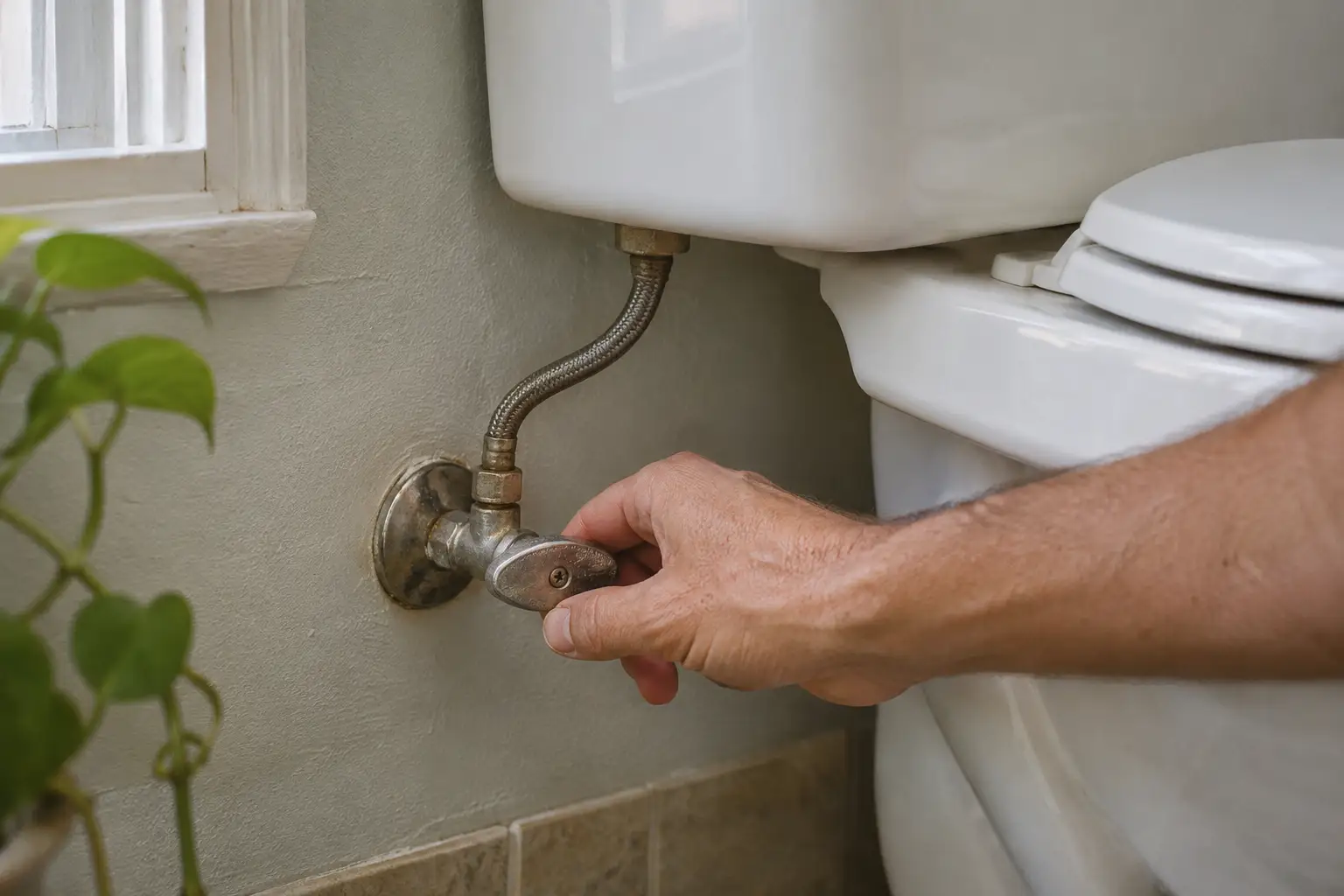
Turn the stop valve
The small valve on the wall or floor behind the toilet closes clockwise. If it will not move, close the main water valve for the house instead.
Protect the floor
Throw down old towels and keep children and pets out. If water is near an outlet or a power strip, switch off that breaker from a dry spot.
The stop valve behind the toilet is the quickest way to end an overflow, but plenty of them have not been touched in years. Turn it gently. If the handle feels locked, stop before something snaps.
A valve that leaks around the stem or will not close all the way is worth replacing while the water is already off. It is a small part, and it makes the next overflow far easier to handle. The guide on shutting off your water shows where the main valve usually sits.
Why a toilet overflows
A toilet overflows when water comes in faster than it can leave. Most of the time that is a clog in the curved trap built into the toilet or in the drain just past it. Now and then the fill valve is to blame and keeps running into a bowl that cannot drain.
| Cause | What you see | What usually fixes it |
|---|---|---|
| Too much paper or a wipe in the trap | The bowl fills to the rim, then drains very slowly | Plunging with a flange plunger |
| A toy, a brush head or another solid object | Plunging moves water but never clears it | A closet auger, or lifting the toilet off the floor |
| A clog farther down the branch drain | The tub or shower nearby also drains slowly | A drain cable run through a cleanout |
| A blocked main sewer line | Water rises in a floor drain or tub when you flush | Main line cleaning, often with a camera look |
| A stuck fill valve or float | Tank water keeps trickling into the bowl | Adjusting or replacing the fill valve |
Wipes sold as flushable are a common reason for repeat clogs. They do not break apart the way toilet paper does, and they snag on rough spots inside older cast iron drains.
How to plunge a toilet the right way
- Use the right plunger. A toilet needs a flange plunger, the kind with a soft sleeve that folds out from the cup. A flat sink plunger cannot seal the bowl opening.
- Wait for the level to drop. Plunge with the bowl about half full. Too much water splashes over, and too little gives the plunger nothing to push against.
- Seal and push slowly. Set the cup over the opening, press down gently to push the air out, then pump firmly in and out a dozen or so times while keeping the seal.
- Test with the tank, not a flush. Once the bowl drains, open the stop valve and let the tank refill. Then flush with your hand ready on the valve.
If several rounds of plunging do nothing, the clog is either something solid or farther down the line. A closet auger reaches a little deeper without scratching the bowl. Past that point, it is time for drain cleaning.
Skip the chemical drain cleaner
Chemical cleaners rarely clear a toilet clog. They sit in the bowl, the heat they give off can crack old porcelain, and they splash on whoever plunges next. If you already poured some in, tell the technician before any work starts.
Cleaning up after an overflow
Water that came out of a toilet bowl is not clean, even when it looks clear. Treat the cleanup as a hygiene job rather than a quick mop.
- Wear rubber gloves and old shoes, and keep children and pets out until the floor is dry
- Soak up standing water with towels, then bag them or wash them on a hot cycle by themselves
- Wash the floor, the base of the toilet and the vanity beside it with a household disinfectant
- Lift bath mats and check under them, and look at the baseboard for water that wicked in
- Run a fan and open a window so the subfloor dries out fully
If the floor stays soft or the toilet rocks after the cleanup, water may have reached the wax ring or the subfloor under it. That deserves a look through toilet repair.
Water coming through the ceiling below
An upstairs overflow can soak through the floor and show up on the ceiling below quicker than you would expect. Water follows joists and pipes, so the stain may not sit directly under the toilet.
- If the stain is near a light fixture, switch off that circuit at the panel and leave the light off
- If the ceiling sags or bulges, keep everyone out from under it and set a bucket below
- Move furniture, rugs and electronics out of the drip zone
- Take photos of the ceiling and the bathroom floor before cleaning, in case your insurer asks
Wet drywall and insulation usually need to dry out or be cut back. The technician can check whether the water came only from the overflow or whether a seal or a supply line is also leaking. The guide to signs of a hidden water leak helps if the stain keeps growing after the floor above is dry.
When an overflow means a main line clog
One toilet that overflows once is usually a local clog. A pattern points somewhere else. The main sewer line carries everything out of the house, so a blockage there shows up at the lowest drains first.
Probably the main line
- Flushing makes water rise in the tub or shower
- A basement floor drain gurgles or backs up
- More than one toilet is slow at the same time
- The washing machine draining makes the toilet bubble
Probably just this toilet
- Only one toilet is affected
- Sinks and tubs drain normally
- Plunging clears it and it stays clear
- You know something fell into the bowl
A main line problem needs a cleaning through the outside cleanout or sewer line repair, and the technician may use a sewer camera inspection to see what is inside the pipe. If water is coming up in the basement, read sewer backup in the basement and stop using water until the line is clear.
Keeping it from happening again
- Flush only toilet paper. Wipes, paper towels, cotton swabs and hygiene products belong in the trash.
- Keep a flange plunger beside each toilet. Searching the garage for one while the bowl fills is how floors get soaked.
- Turn the stop valve twice a year. Close it and open it once so it never seizes.
- Plan for the holidays. A full house of guests over the holiday season in Cheyenne is when toilets and drains work hardest.
- Fix a running toilet. A fill valve that never shuts off fully is the one most likely to run over when the bowl clogs.
A few more habits for drains, valves and fixtures are in the plumbing maintenance checklist.
Questions people in Cheyenne ask
Should I keep flushing to clear a clog?
No. A second flush sends a full tank of water into a bowl that already cannot drain, and that is how most overflows start. Close the stop valve behind the toilet, let the bowl drop to about half full, then plunge. Only test with a flush once the water drains on its own.
Why does my toilet overflow when nothing seems clogged?
A fill valve that sticks open can keep running into the bowl, or a partial clog can let water out only slowly. A blocked roof vent can also make flushes weak and gurgly. If the toilet keeps running after the tank fills, the fill valve is the likely cause.
Is overflowed toilet water dangerous?
Water from a bowl carries germs even when it looks clear, and water from a clogged toilet that held waste is worse. Wear gloves, keep children and pets away, disinfect the floor and wash towels on their own. If the floor or ceiling below got soaked, dry it quickly to stop mold.
Can a toilet overflow damage the floor?
Yes, if water sits on the floor or gets under the toilet base. It can soften the subfloor, rot the wood around the flange and loosen the wax ring. A toilet that rocks, a soft spot near the base or a stain on the ceiling below are all signs to have it checked.
When should I call a plumber for an overflowing toilet?
Call when plunging does not clear it, when water rises in other drains as you flush, when the stop valve will not close, or when water has gone through to the floor or ceiling below. Tell us what you have tried and a local technician can come out to find the clog.
What if the stop valve behind the toilet will not turn?
Do not force it with pliers, because old valves can snap at the stem and spray. Hold the float up or the flapper down to stop the water for the moment, then close the main water valve for the house. The stuck valve can be replaced during the repair.