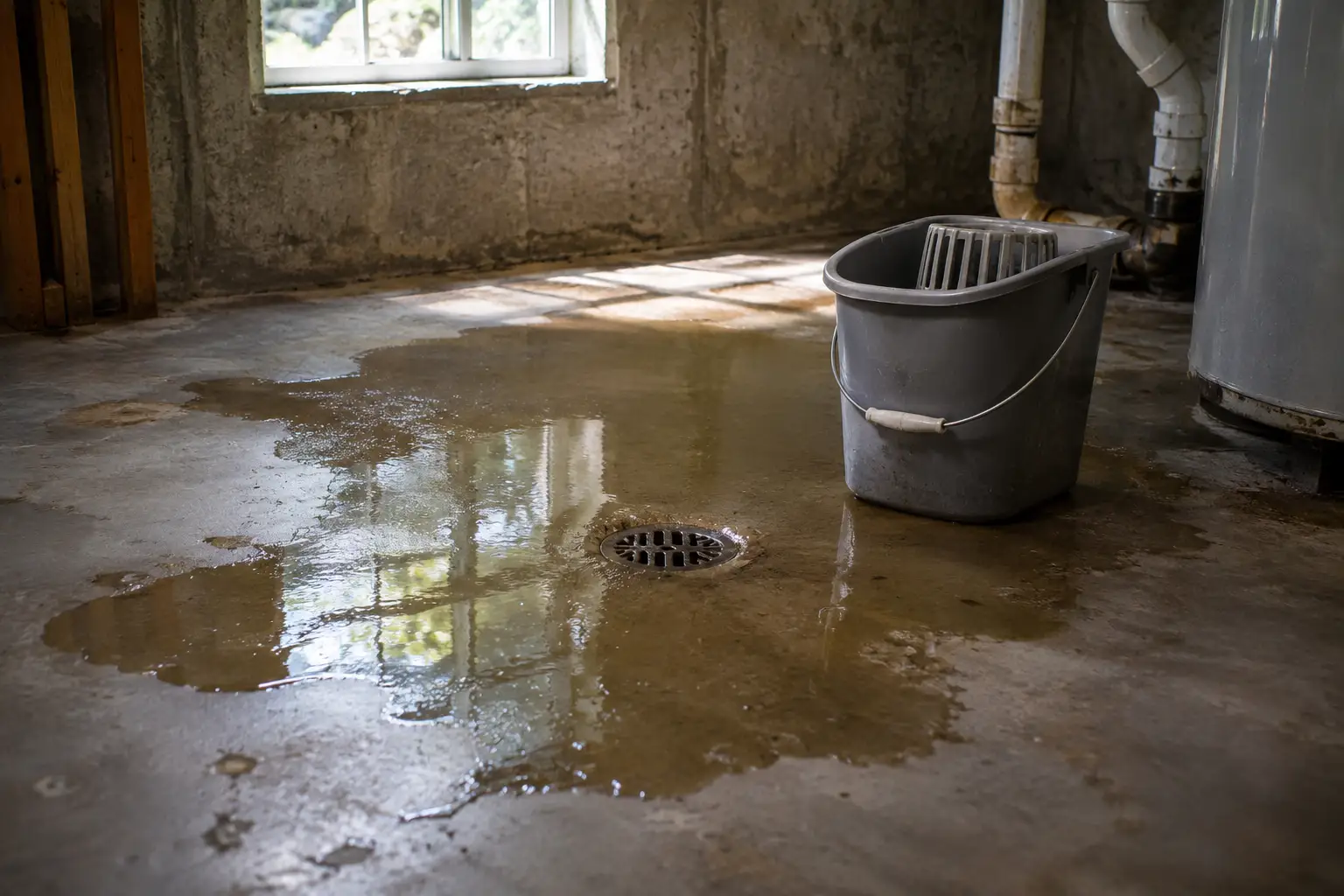
A sewer backup in the basement means waste water has nowhere to go but up through the lowest drain in the house. Stop running water anywhere in the home, keep everyone away from the water and call us. A local technician can come out to clear the main line and find out why it backed up in the first place.
What to do right now
The short answer
Stop using water. Every flush, shower or load of laundry adds to what is coming up the floor drain. Keep children and pets out of the basement, stay out of standing water near anything electrical, and call Plumber Cheyenne so the main line can be cleared.
Tell everyone to stop using water
No flushing, no showers, no dishwasher and no washing machine. Pause any appliance that drains on a timer if you can reach it safely.
Keep away from electricity
If water has reached outlets, cords, the furnace or the water heater, do not walk into it. Switch off power at the main panel only if you can reach it from a dry spot. If you cannot, call your electric company.
Protect yourself
Sewage carries bacteria and viruses. Wear rubber boots and gloves if you must go down, and wash your hands well afterward.
Call us
Tell us which drain the water is coming from, whether it is still rising and whether you know where the cleanout is.
Why sewer water comes up the floor drain
Every drain in the house feeds one main sewer line that runs out under the yard. When that line is blocked, water from upstairs fixtures stops at the blockage and has to go somewhere. The lowest opening is usually the basement floor drain, so that is where it shows up first.
Over the holiday season in Cheyenne, a house full of guests and a lot of greasy cooking is a common mix behind main line clogs. A line that was already partly blocked by roots tends to give up when the load goes up.
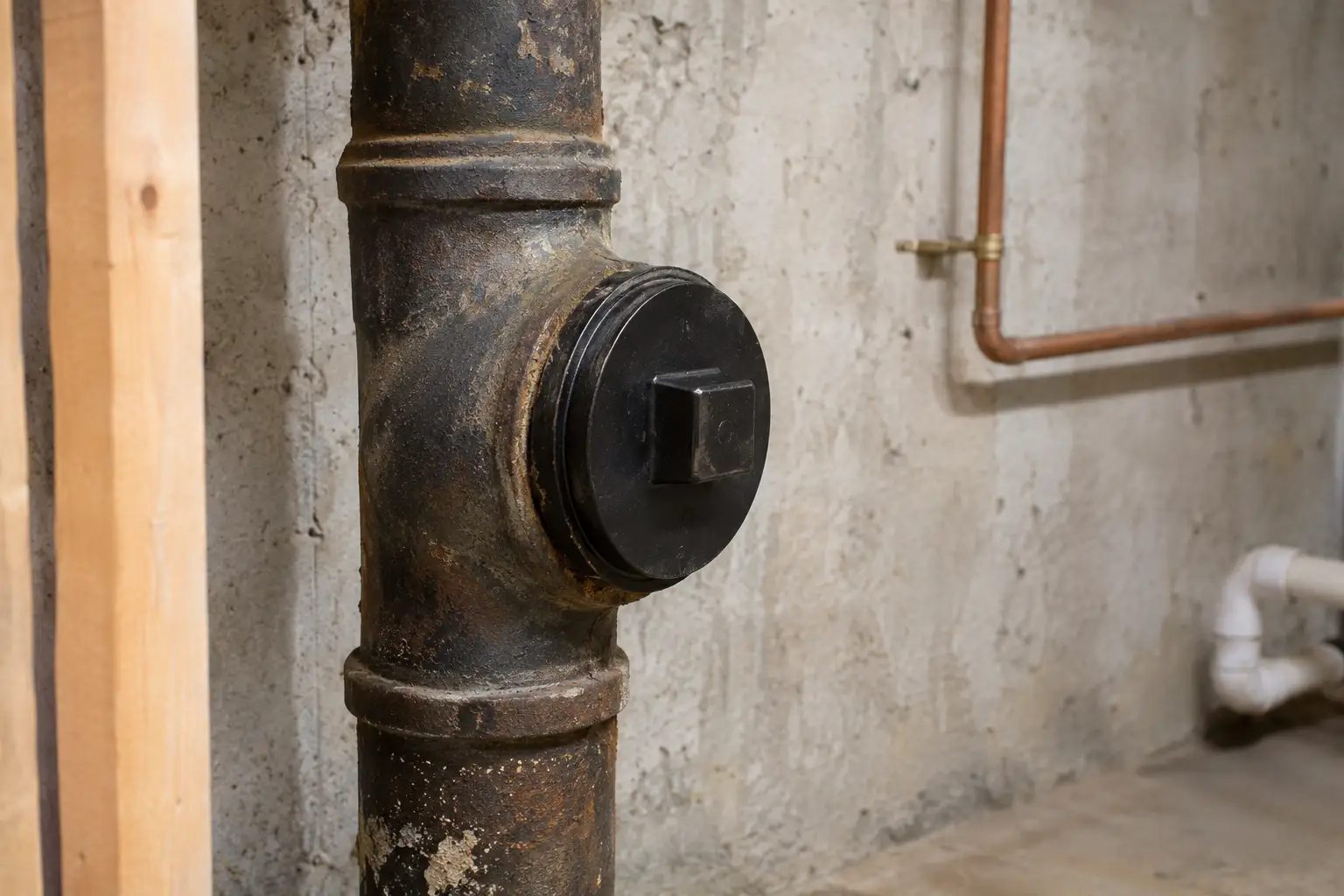
Finding the cleanout. A cleanout is a capped opening that gives straight access to the drain line. Inside, it is often a black or brass plug near the bottom of the main stack, or low on the basement wall where the line leaves the house. Outside, it may be a short capped pipe sticking up from the yard near the foundation.
Knowing where it is lets the technician get to work quickly. Do not open it yourself while the line is backed up. A cap with a column of sewage behind it can let a rush of waste out onto the floor.
Signs the main line is backing up
Act right away
- Sewage on the basement floor. Stop all water use and call.
- Water near the furnace or the panel. Stay out of it and get the power shut off safely.
Get it seen today
- Toilets bubble when the washer drains. Air is being pushed back through a blocked line.
- Several drains slow at once. The blockage is past the point where the branches join.
Can wait a few days
- A sewer smell near the floor drain. The trap may simply be dry. Pour a bucket of water into it.
- One slow sink. Likely a local clog rather than the main line.
If you are not sure which group you are in, run nothing and call. It is far easier to clear a line before the basement fills than after. The guide on when a clogged drain becomes an emergency goes through more examples.
Mistakes that spread a sewer backup
- Running water to see if it clears. Every test sends more sewage into the basement.
- Pouring chemical drain cleaner into the floor drain. It will not clear a main line, and it makes the water dangerous for anyone who touches it. Tell the technician if any was used.
- Wading in near power. Standing in water around outlets, cords or appliances that are still on is the biggest danger in a flooded basement.
- Opening the cleanout under pressure. The cap can burst off with the weight of water behind it.
- Waiting it out. A backup does not drain away on its own while the house keeps using water.
What the technician does
- Finds the access point. Usually the main cleanout, or a toilet lifted from the floor if there is no cleanout to use.
- Clears the line. A drain cable with a cutting head breaks through roots and buildup. For heavy grease or roots, hydro jetting scours the pipe walls clean.
- Looks inside. A sewer camera inspection shows whether the pipe is cracked, sagging or full of roots, and how far from the house the trouble sits.
- Explains the options. You hear what was found and what fixes it, from routine cleaning to sewer line repair. Nothing starts until you decide.
| Step | What usually happens | Why it matters |
|---|---|---|
| Clearing the blockage | Cable or jetting through the cleanout | Gets the drains working again so the house is usable |
| Camera inspection | Video of the line from the house toward the street | Shows whether roots, a break or a sag caused the backup |
| Spot repair | A broken section dug up and replaced, or lined | Fixes the cause so the backup does not return |
| Cleanup and drying | Water removed, surfaces disinfected, space dried | Keeps mold and odor out of the basement |
Every line is different. A long run, deep roots or frozen ground in a Cheyenne winter can change what the repair involves, and the technician explains the options before any work starts.
Cleanup, photos and insurance
Before you clean, take photos and video of the water, the drain it came from and everything it touched. Many homeowners policies treat sewer backup separately from other water damage, and some only include it with an added endorsement. Call your insurer early and ask what they need from you.
- Wear boots, gloves and eye protection while you clean
- Throw out soaked carpet, padding, cardboard and anything soft that cannot be washed hot
- Scrub hard floors and walls with detergent, then disinfect them
- Run fans and a dehumidifier until the space is fully dry
- Keep children, pets and anyone with a weak immune system out until it is done
A large backup with standing sewage is a job for a water damage cleanup company. The technician focuses on the plumbing and can tell you when the line is safe to use again.
Backwater valves and other prevention
A backwater valve is a one way flap fitted in the main line. It lets water leave the house but swings shut when sewage tries to flow back in. It helps most where backups come from the public main rather than a clog in your own line, and it needs a yearly check so the flap keeps moving.
- Pour cooled grease into a can and put it in the trash
- Flush only toilet paper, and keep wipes out of every toilet
- Have the main line cleaned on a schedule if roots keep coming back
- Keep the floor drain trap filled with water so sewer gas stays out
- Learn where the cleanout is now, before you need it
If the line backs up more than once, a camera look is the best way to stop guessing. The plumbing maintenance checklist has more yearly habits that protect drains.
Questions people in Cheyenne ask
Is a sewer backup in the basement dangerous?
Yes. Sewage carries bacteria and viruses, and standing water near outlets, cords or appliances can carry current. Keep children and pets away, wear boots and gloves, and do not walk into water that might be touching anything electrical. Shut off power only from a dry spot.
Can I use my toilet during a sewer backup?
No. Every flush, shower or load of laundry adds water that has nowhere to go but out of the lowest drain. Hold off on all water use until the line is cleared and the technician tells you it is flowing freely again.
How do I know if the problem is my line or the city sewer?
If neighbors on the same street have backups at the same time, the public main may be at fault. If only your house is affected, the blockage is usually in your own line. The technician can clear the line and use a camera to see exactly where the problem sits.
Will a sewer backup happen again?
It depends on the cause. A one time clog from grease or wipes may not return if habits change. Roots, a sagging section or a broken pipe usually cause repeat backups until the line is repaired. A camera inspection shows which one you are dealing with.
Does homeowners insurance cover a sewer backup?
Many standard policies leave out sewer backup unless a specific endorsement was added. Check your policy, take photos and video of the damage before cleaning, and call your insurer early. Keep any notes from the technician about what caused the backup, since the insurer may ask.
What is a backwater valve and do I need one?
A backwater valve is a one way flap in the main sewer line that lets water out of the house and closes if sewage tries to flow back in. It helps most when backups come from the public main. The technician can tell you whether your line is a good fit for one.