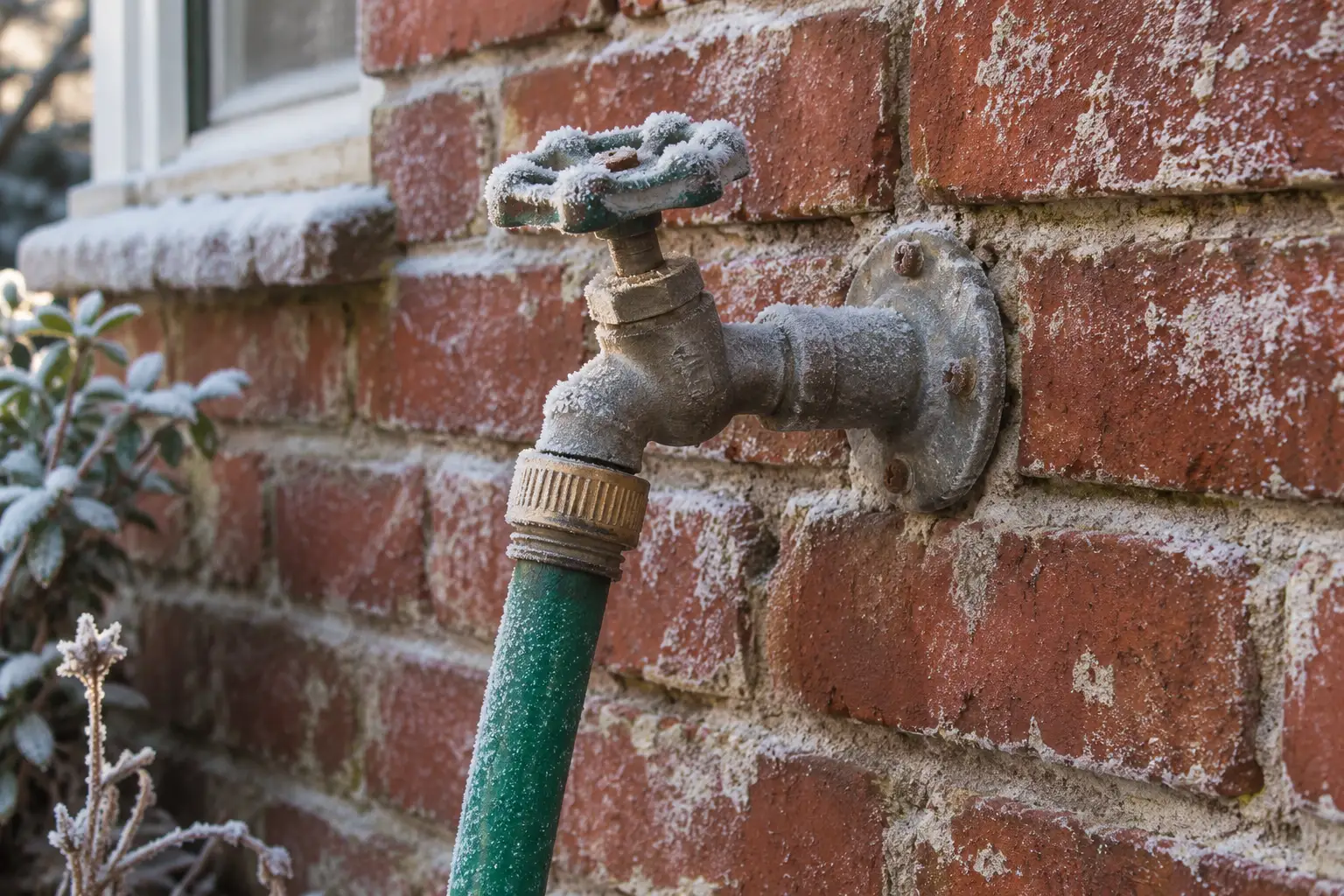
The outdoor faucet is the one fixture that lives half outside in a Cheyenne winter, and it usually lets you know it froze only when you turn it on in spring and water shows up in the basement. If yours drips, sprays at the handle or leaks indoors, call us for outdoor faucet repair in Cheyenne and a local technician can come out to find out whether the faucet or the pipe behind it has split.
Check for a split before the first watering
A faucet that froze over the winter can look perfect from outside. The damage is usually on the pipe inside the wall, so the first spring test needs someone watching indoors.
Take the hose off first
Unscrew any hose, splitter or timer from the faucet so you see what the faucet itself does.
Post someone indoors
Have a second person stand at the basement or crawl space wall behind the faucet, or open the access panel if there is one.
Open the faucet slowly
Turn the handle and let it run. A good faucet sends a full stream outside and nothing inside.
Close it at the first sign of water indoors
If water drips or sprays inside the wall, shut the faucet, close the main if needed and call Plumber Cheyenne. A local technician can come out to repair it.
A faucet that only leaks when it is open has usually split inside
With a frostproof faucet, the crack sits behind the shut off point, so water escapes only while the handle is open. Stop using it until it is repaired, because each use soaks the wall.
What outdoor faucet repair in Cheyenne covers
How a hose left on splits the pipe
A frostproof faucet, also called a sillcock, is built to survive cold. The handle is outside, but the actual valve sits at the end of a long stem inside the heated part of the house. When you close it, the water in the barrel drains out through the spout, so there is nothing left in the cold part to freeze.
That only works if the water can drain. A hose left attached holds the water in the barrel. On the first hard freeze it turns to ice, swells and splits the barrel or the pipe just behind the valve. Nothing shows until the spring, which is why so many basement leaks start the day someone waters the lawn.
Older homes may still have standard hose bibs with the valve right at the outside wall. Those rely on a shut off valve inside the house that has to be closed and drained every fall. If it was missed, the whole short run of pipe to the faucet is at risk. The guide on keeping pipes from freezing covers the other cold spots in the house.
Signs your outdoor faucet needs work
Act right away
- Water inside the wall when the faucet is open. Close it and do not use it again until repaired.
- Water on the basement floor in spring with no other source. Close the main and call.
Get it seen today
- A stain or damp spot behind the faucet indoors. A slow leak inside the wall.
- Water spraying from the handle or the cap on top. A worn packing nut or vacuum breaker.
Can wait a few days
- A drip from the spout with the handle closed. A worn washer or seat at the end of the stem.
- A stiff handle that needs force to close. Worn parts that will start dripping soon.
Why outdoor faucets leak
| Cause | Where the water shows | What usually fixes it |
|---|---|---|
| Hose left on in a freeze | Inside the wall or basement when the faucet is open | Replace the split faucet or pipe section. |
| Inside valve left open in fall | At the faucet or along the pipe indoors | Repair the split and replace the faucet if needed. |
| Worn stem washer or seat | Drip from the spout | Replace the washer or the stem. |
| Loose or worn packing | Around the handle while running | Tighten or repack the stem. |
| Failed vacuum breaker | Spray from the cap on top | Replace the vacuum breaker. |
| Faucet sloped toward the house | Water stays in the barrel and freezes | Reset the faucet with a slight downward slope. |
A frozen hose bib, urgent or not
Call about it now
- Water is running inside a wall, ceiling or crawl space
- The faucet will not close and water keeps flowing
- Water is near outlets, the panel or the furnace
- The pipe to the faucet is frozen during a cold snap
Fine to book a visit
- A drip from the spout when it is closed
- Spray from the handle only while it runs
- A vacuum breaker that spits a little
- A faucet you want replaced before winter
If a frozen hose bib or the pipe behind it is still frozen, do not use a torch or open flame to thaw it. Remove the hose, open the faucet and let gentle indoor heat do the work, then read how to thaw a frozen pipe or call.
Fix the faucet or replace it
- Repair. Drips, handle leaks and a bad vacuum breaker are usually fixed with new washers, packing or a new cap.
- Replace. A split barrel cannot be patched. The faucet comes out and a new one goes in, sized so the valve sits inside the heated wall.
- Upgrade. An old standard hose bib can be swapped for a frostproof faucet so there is no inside valve to remember each fall.
- Repair the pipe. If the split runs past the faucet, the damaged pipe is cut out and replaced along with it.
Wet drywall or insulation behind the faucet is a separate job. The technician can show you what got soaked so you can dry it out quickly.
What the visit looks like
- Test the faucet. The technician runs it with someone watching the inside wall, the same way you did.
- Find the damage. That can mean opening a small section of ceiling or wall behind the faucet.
- Explain the options. You hear whether it is a washer, a new faucet or a pipe repair. Nothing starts until you say go ahead.
- Repair and retest. The new parts go in, the water goes back on and the faucet runs while the inside is checked for drips.
Questions worth asking
- Is this a frostproof faucet, and is it the right length for the wall?
- Does it slope down toward the outside so it drains?
- Is there an inside shut off for this faucet, and where is it?
- Are any other outdoor faucets at risk the same way?
Before the visit, the emergency checklist helps you note what you saw and when.
Fall shutoff steps for Cheyenne winters
Do this before the first hard freeze, not after. It takes a few minutes per faucet.
- Disconnect every hose. Take off splitters, timers and quick connectors too.
- Close the inside valve if there is one. Then open the outside faucet to let the water drain.
- Open the small drain cap on the inside valve. Catch the water in a bucket, then close the cap.
- Leave the outside faucet open on standard hose bibs so any water left can expand.
- Fit a foam cover over each faucet for an extra layer against the wind.
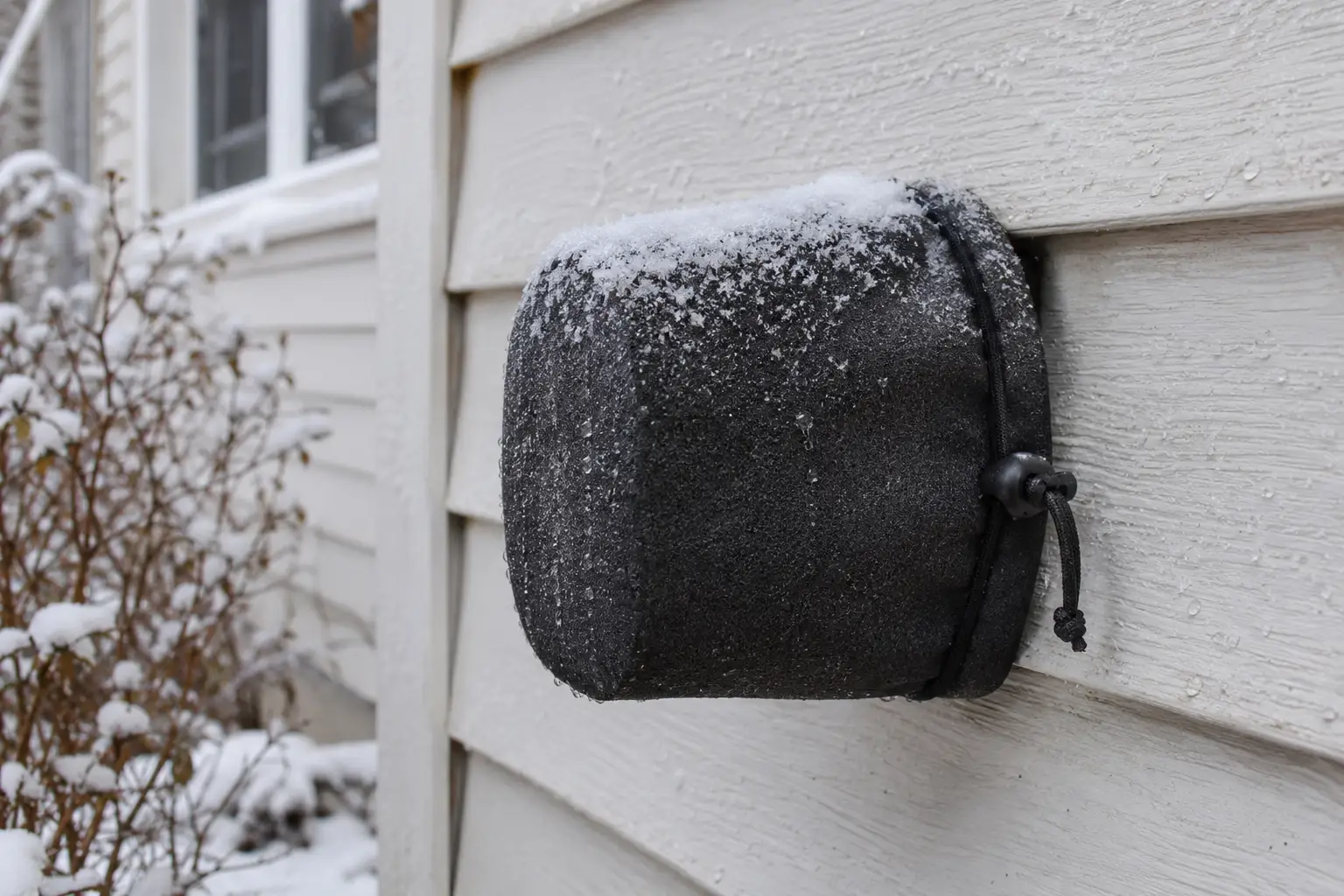
Store the hose in the garage so no one is tempted to hook it back up on a mild winter day and forget it. If you ever find a hose still attached after a cold night, take it off and test the faucet in spring with someone watching inside. The maintenance checklist puts this step with the rest of the fall jobs.
Questions people in Cheyenne ask
Why does my outdoor faucet leak inside the house?
Most often the faucet froze with a hose attached and the barrel split behind the valve. Water then escapes inside the wall only while the faucet is open. Stop using it and have the faucet replaced, along with any pipe that split with it.
Do I need to disconnect my hose in winter?
Yes. A hose holds water inside a frostproof faucet so it cannot drain. When that water freezes, it can split the faucet inside the wall. Take the hose off before the first hard freeze and leave it off until spring.
What is a frostproof sillcock?
It is an outdoor faucet with a long stem so the valve sits inside the heated part of the house. When closed, the water drains out of the barrel, leaving nothing in the cold part to freeze, as long as no hose is attached.
How do I fix a frozen hose bib?
Remove the hose, open the faucet and let gentle indoor heat warm the wall behind it. Never use an open flame or a torch. Once water flows, check inside for leaks, because a frozen hose bib often splits as it freezes.
Why does water spray from the top of my outdoor faucet?
The cap on top is usually a vacuum breaker, which stops hose water from being pulled back into the house. When it wears out, it spits or sprays while the hose is on. Replacing the vacuum breaker normally fixes it.
Are foam faucet covers enough to stop freezing?
They help, but they work best on top of the basics. Disconnect the hose, drain the faucet and close any inside valve first. A cover alone will not protect a faucet with a hose still attached.
Outdoor faucet repair across Cheyenne
We take calls about hose bibs and sillcocks in every part of Cheyenne, most of them in early spring and late fall. Tell us the street and where the water showed up when you call.
ZIP codes 82001, 82007, 82009