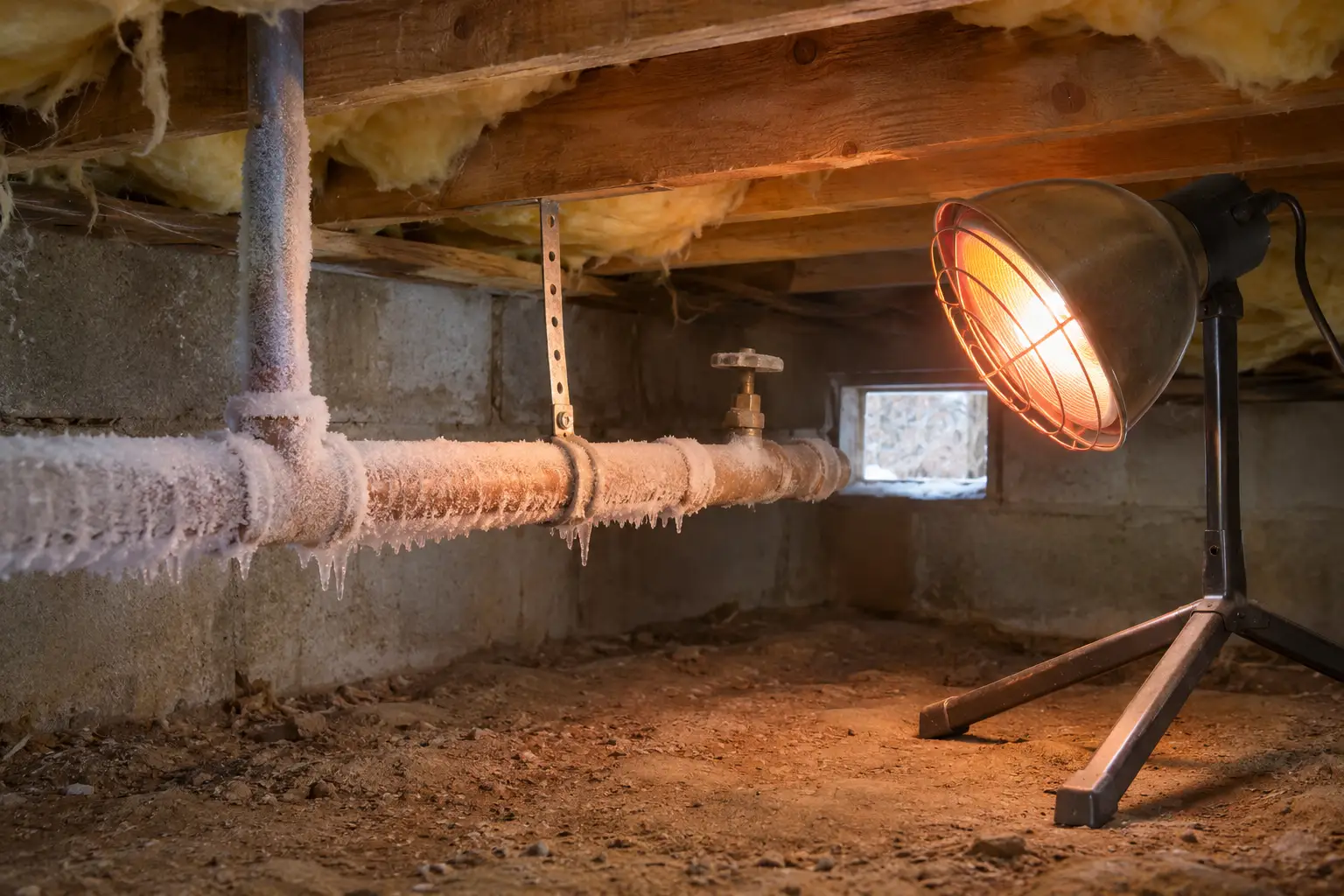
A faucet that gives a trickle or nothing at all after a bitter night usually means a pipe has frozen somewhere along its run. Frozen pipe repair in Cheyenne is about thawing that section safely and catching any split before water flows through it again. Open the faucet, keep the heat gentle, and call us if you cannot find the frozen spot or you see water where it should not be.
Think a pipe is frozen? Do this first
Open the faucet it feeds
Open the hot and cold sides a little. Moving water helps the ice melt, and an open faucet gives the pressure somewhere to go as it thaws.
Find the cold spot
Follow the line back from the faucet toward a garage, crawl space, outside wall or unheated cabinet. Frost on the pipe, or a length that feels much colder than the rest, usually marks the ice.
Add gentle heat
Open cabinet doors, warm the room with a space heater set well away from anything that can burn, or move a hair dryer slowly along the pipe. Start near the faucet and work back toward the ice.
Keep the main valve in reach
If the pipe split, water will spray the moment the ice melts. Know where the main shut off valve is before you start, and call us if anything leaks.
Never thaw a pipe with a flame.
A torch, a propane heater or a lighter can scorch framing, melt PEX and start a fire inside the wall. Keep electric heaters and hair dryers away from standing water, and plug them in only from a dry spot.
What frozen pipe repair covers
Thawing the ice is only half the job. The other half is finding out whether the pipe survived and making sure the same spot does not freeze again next month.
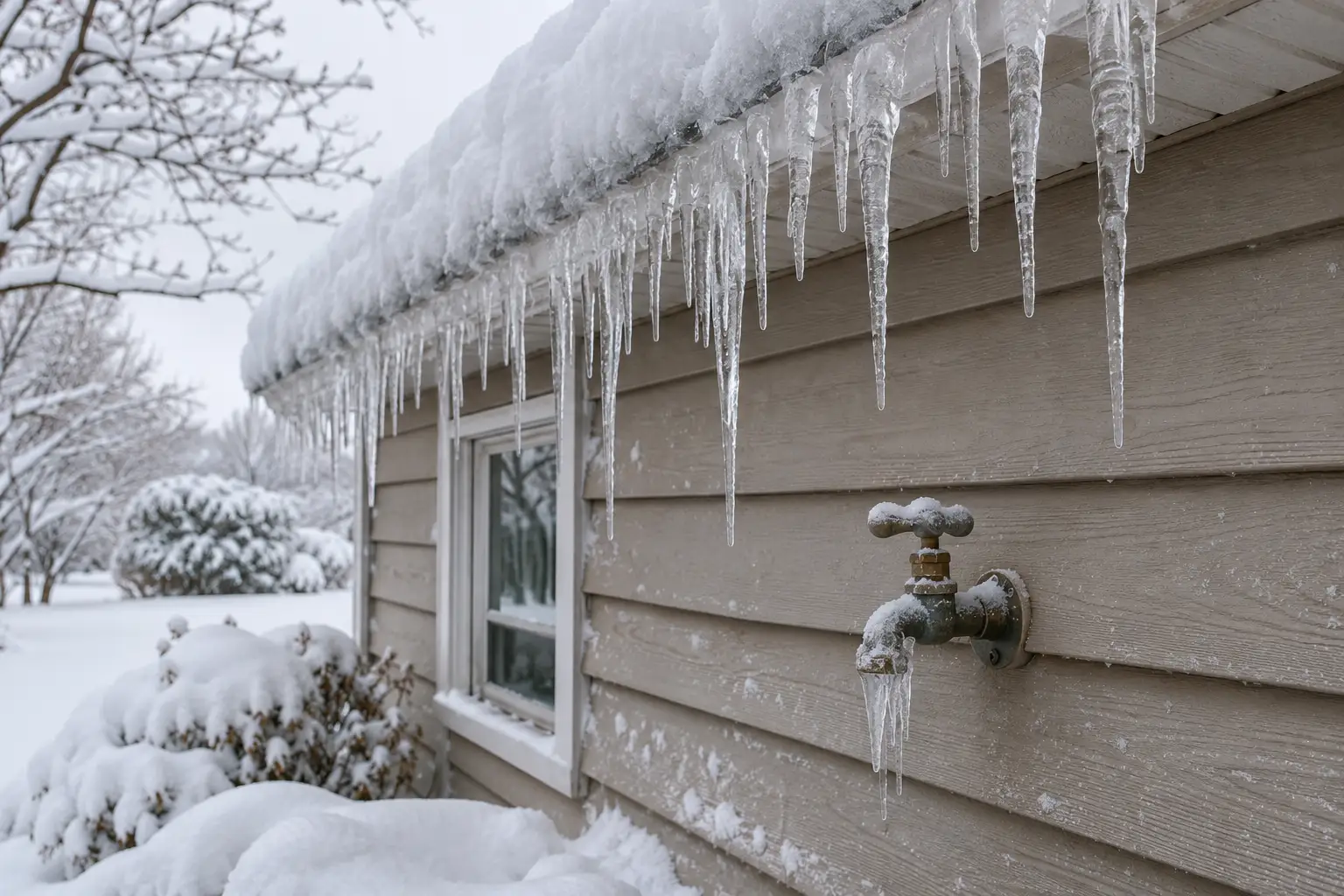
Outdoor faucets are often the first thing to freeze in a Cheyenne winter. A hose left connected traps water in the faucet body, and the ice can split the pipe a foot or more inside the wall where nobody can see it.
That hidden split tends to show up in spring, the first time someone turns on the hose and water runs into the basement instead of the yard. If your outside faucet froze this winter, have it checked before you use it again.
A freeze resistant sillcock, which closes the water inside the warm part of the wall, is often the answer for a faucet that freezes every year.
Signs of a frozen pipe
Act right away
- Water dripping from a ceiling or wall after a thaw. The pipe split. Close the main valve and call.
- A pipe with a visible bulge or crack. Shut the water off before you add any heat.
Get it seen today
- No water at one faucet on a cold morning. Open it and warm the line it runs through.
- Frost on an exposed pipe. Warm the space and watch for drips as it thaws.
Can wait a few days
- A faucet that runs slowly, then recovers by midday. Insulate that line before the next cold night.
- An outside faucet that froze but has not been used since. Have it checked before spring.
Where pipes freeze in Cheyenne homes
| Spot | Why it freezes | What helps |
|---|---|---|
| Garage walls and ceilings | Garages are rarely heated, and lines to a laundry or upstairs bath often pass through them. | Insulate the pipe and keep the garage door closed during a cold snap. |
| Crawl spaces | Cold air slips in through vents and gaps around the foundation. | Seal gaps, cover vents for winter and wrap the lines. |
| Outside walls | Kitchen and bathroom lines on exterior walls sit close to the cold. | Open cabinet doors so warm room air reaches the pipes. |
| Outdoor faucets | Water trapped by a connected hose freezes in the faucet and the pipe behind it. | Disconnect hoses in the fall and think about a freeze resistant faucet. |
| Attics and bonus rooms | Lines run above the insulation or close to soffit vents. | Move insulation over the pipe, not under it. |
A pipe that froze once will likely freeze again, because the cold spot is still there. Ask the technician about protecting that run, not just thawing it.
When a frozen pipe becomes an emergency
Call now
- Water is spraying or dripping anywhere after a thaw
- The whole house is dry and you cannot find the frozen section
- The frozen line sits behind a finished wall or ceiling
- Several fixtures stopped at once, which points to the main supply line
Can usually be handled carefully at home
- One faucet on an outside wall is slow and the pipe under it is exposed
- You can see frost on a bare pipe within reach
- Water came back after you opened the cabinet and warmed the room
If you are not sure the pipe is intact, keep someone near the main shut off valve while it thaws. The guide on how to thaw a frozen pipe walks through each method, and emergency plumber covers what to do when water is already on the floor.
How the technician handles a frozen line
- Locate the ice. The technician traces the line from the dry faucet and checks the cold spots by touch, with a thermometer or with a thermal camera.
- Thaw it slowly. Controlled heat brings the pipe back up to temperature without stressing the joints.
- Check for splits. With a faucet open, the line is watched as water returns, since a crack often stays hidden until then.
- Explain the options. If anything broke, you hear what the repair involves before any work starts, and you decide.
- Protect the run. Insulation, sealing a draft or moving the line keeps the same spot from freezing again.
Copper, PEX and older galvanized pipe in the cold
Copper conducts cold well and freezes quickly. When ice forms, the pressure has nowhere to go and the pipe splits, usually as a long crack rather than a round hole.
PEX is more forgiving. It can stretch a little and often comes through a freeze intact, but the brass or plastic fittings at each end can still crack.
Galvanized steel in older homes is already thin from rust on the inside. A freeze can finish off a section that was close to failing, and the technician may suggest replacing more than the frozen length. If that comes up, repiping explains the options.
Keeping pipes from freezing next winter
- Hold the thermostat steady through the night instead of turning it way down.
- Prop open the doors under kitchen and bathroom sinks that sit against exterior walls when a hard freeze is coming.
- Let a faucet on an outside wall drip on the coldest nights, since moving water is slower to freeze.
- Disconnect garden hoses and close any inside valve that feeds an outdoor faucet before the first freeze.
- Wrap pipes in garages and crawl spaces with foam sleeves, and seal drafts where they enter the house.
- If you leave town in winter, ask someone to check the house, or close the main and drain the lines.
More detail is in the guide on keeping pipes from freezing and in the seasonal maintenance checklist.
Questions people in Cheyenne ask
How do I know if my pipes are frozen?
The clearest sign is a faucet that gives little or no water on a cold morning while others still work. You may also see frost on an exposed pipe, a bulge in a line, or a toilet that does not refill. One wall feeling much colder than the rest is another clue.
How long does it take a frozen pipe to thaw?
It depends on where the ice is and how cold the space is. An exposed pipe under a sink can thaw fairly quickly with gentle heat. A line inside an outside wall or deep in a crawl space takes longer, and that is when calling a technician makes sense.
Will a frozen pipe always burst?
No. Many frozen pipes thaw without damage. The risk comes from pressure building between the ice and a closed faucet, which is why you open the faucet first. Copper and older steel split more often than PEX, but any pipe can crack if the freeze is hard enough.
Can I use a space heater to thaw a pipe?
Yes, if you keep it well away from anything that can burn, never leave it running unattended and keep it out of any standing water. Aim it at the area around the pipe rather than right against it. Never use a torch, a propane heater or any open flame.
Should I let my faucets drip in cold weather?
On the coldest nights, a slow drip from a faucet on an outside wall helps. Moving water is slower to freeze, and an open faucet relieves pressure if ice does form. On a single handle faucet, set the handle in the middle so both hot and cold lines move.
What if I am away when the pipes freeze?
Close the main shut off valve as soon as you get home, then look for water on ceilings, walls and floors before turning it back on. Call us with what you find. If you travel in winter, leave the heat on and ask someone to check the house.
Frozen pipe repair across Cheyenne
A cold snap reaches every part of Cheyenne at once, from 82001 to 82009. When you call, let us know which faucets are dry and where the pipes run so the technician arrives ready.
ZIP codes 82001, 82007, 82009