When the water runs brown in the morning, the shower barely trickles and a new leak shows up every few months, patching one more spot stops making sense. Call us about repiping in Cheyenne and a local technician can come out to look at what your house is plumbed with, how worn it is, and whether one run or the whole house needs new pipe.
Repiping in Cheyenne, where to start
You do not need to know plumbing to get a good read on your pipes. Ten minutes in the basement or crawl space tells you a lot before anyone comes out.
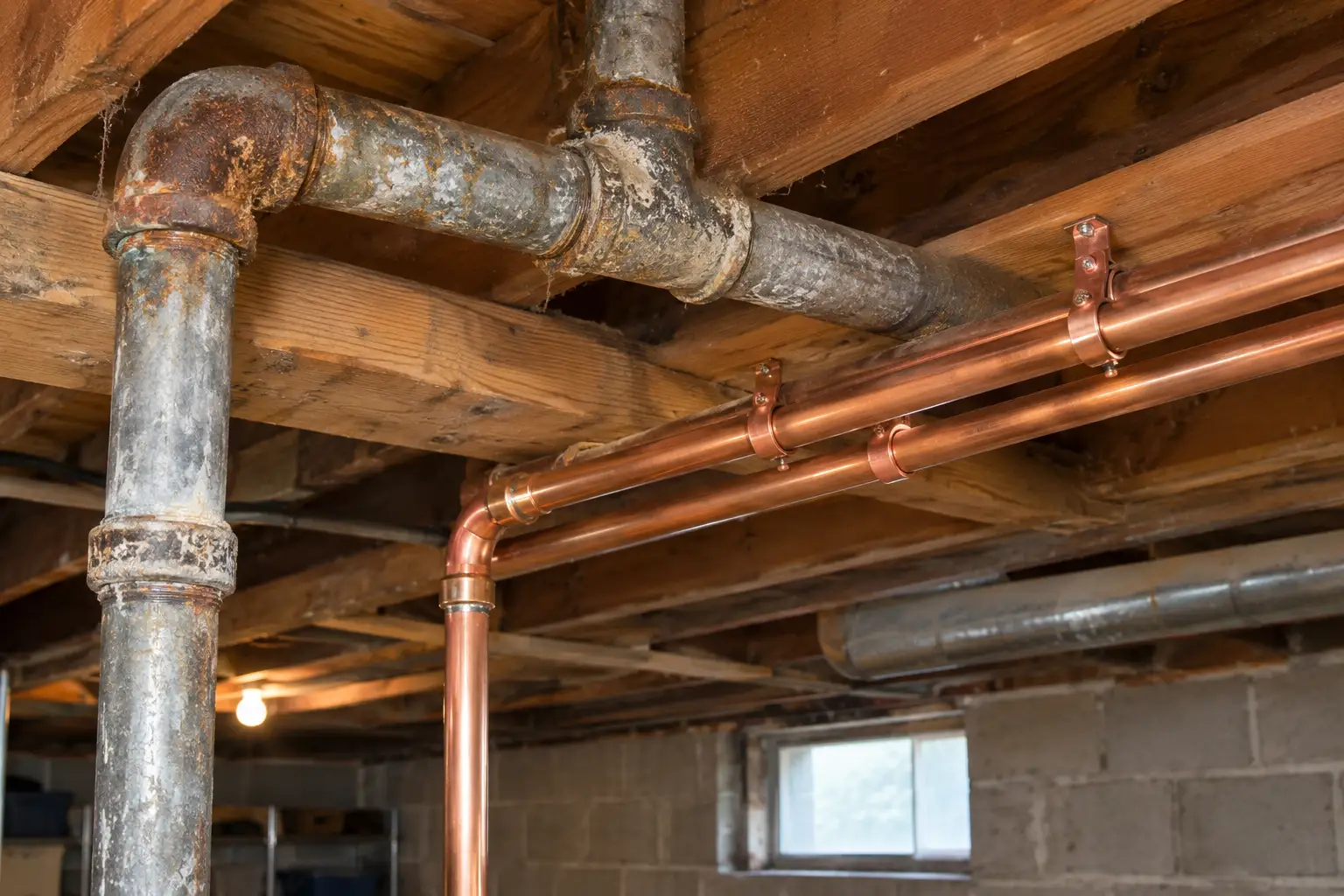
Find a pipe you can see
Look near the water heater, the main shut off valve or where pipes run along the basement ceiling.
Try a magnet
Galvanized steel is gray and a magnet sticks to it. Copper is reddish brown and a magnet will not stick. Gray plastic stamped PB is polybutylene.
Notice what the water does
Brown or rusty water after the taps sit overnight, weak flow at several fixtures and repeated pinhole leaks all point to worn pipe.
Call Plumber Cheyenne
Tell us what you found and how old the house is, if you know. A local technician can come out and walk through the plumbing with you.
Repiping is usually planned, not rushed
Unless a pipe has burst, there is time to look at the whole system and decide between a full repipe and replacing the worst sections. If water is pouring out right now, start with burst pipe repair.
Signs it is time to repipe
Act right away
- A pipe has burst or is spraying. Shut the main valve and call.
- Water through a ceiling from a supply line. Close the main and switch off power to that area from a dry spot.
Get it seen today
- A third or fourth leak in the same pipe run. The pipe is failing along its length, not in one spot.
- Polybutylene fittings that are cracked or weeping. These tend to fail without much warning.
Can wait a few days
- Rusty water at the first draw of the day. Galvanized pipe rusting on the inside.
- Pressure that keeps dropping year after year. Scale narrowing old steel lines.
Low pressure has other causes too, from a partly closed valve to a failing pressure reducing valve. Read why is my water pressure low before assuming the pipes are the problem.
What a repipe covers
Repiping usually means the supply lines, the pipes that carry pressurized water to the faucets. Drain and sewer lines are a separate system. If the drains are the trouble, see sewer line repair instead.
Galvanized and polybutylene pipe
Galvanized steel was common in older homes. It is steel coated in zinc, and once the coating wears through, it rusts from the inside out. The rust narrows the pipe, which lowers pressure, tints the water and eventually eats through at the threaded joints. Patching galvanized often means joining new pipe to old steel that is just as close to failing.
Polybutylene is a gray, sometimes blue or black, flexible plastic used in many homes built in the 1980s and early 1990s. It breaks down from the inside over time and its fittings are known for cracking. It can look fine right up until it splits.
Copper lasts well in most homes, but very old copper can develop pinhole leaks. A house with a mix of all three, patched over decades, is a common reason people start asking about a repipe.
PEX or copper for the new lines
| Point | PEX | Copper |
|---|---|---|
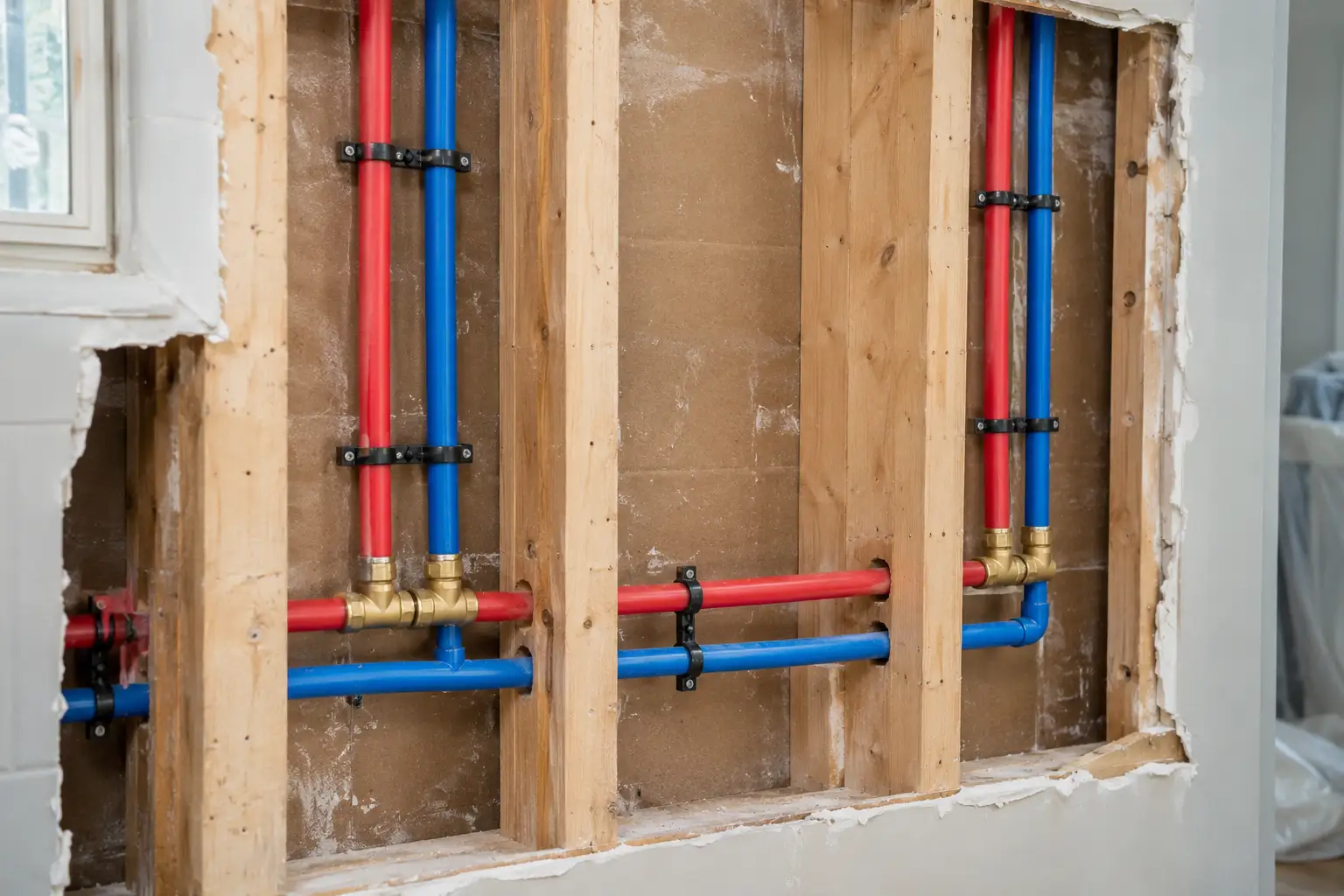
| What it is | Flexible plastic tubing, red for hot and blue for cold | Rigid metal pipe joined with solder or press fittings |
| Openings in walls | Fewer, since it bends around corners and snakes through framing | More, since straight lengths need fittings at turns |
| Freezing | Can stretch a little before it splits, though it still can freeze | Splits more readily when water freezes inside |
| Sunlight | Must be kept out of direct sunlight | Not affected by light |
| Noise | Quieter, less water hammer | Can bang or tick as it heats and cools |
| Good fit for | Most whole house repipes in finished homes | Exposed runs, near the water heater, or by preference |
PEX is the usual choice for a whole house repipe because it bends through walls and floors in long runs with few joints. Many homes end up with both, with copper at the water heater and in exposed spots, and PEX through the walls.
In a Cheyenne winter, the bigger question than material is where the pipe runs. New lines are kept out of outside walls, unheated garages and crawl spaces where they can be, and insulated where they cannot.
What a whole house repipe involves
- Walk through. The technician looks at the existing pipe, the main shut off, the water heater and every fixture, and checks the water pressure.
- Explain the plan. You hear which pipe runs where, how many wall openings to expect, which material makes sense and how long the water will be off each day. Nothing starts until you say go ahead.
- Open small sections. Drywall is cut in small, neat openings at fixtures and along runs, with floors and furniture covered.
- Run the new lines. New supply lines go in through the basement, attic and walls, with new stop valves at sinks and toilets.
- Test under pressure. Every joint is checked before the walls are closed, then each fixture is run to clear the air.
- Patch the walls. The openings are closed and patched afterward. Ask whether texture and paint are part of the job or left for you.
The old pipe is usually cut off and left in place inside closed walls, because pulling it out would mean opening far more drywall.
Whole house or a partial repipe
A whole house repipe makes sense when
- Most of the supply pipe is galvanized or polybutylene
- Leaks keep turning up in different parts of the house
- Pressure is weak at nearly every fixture
- You are already opening walls for a remodel
A partial repipe may be enough when
- Only one branch or one bathroom has old pipe
- Earlier work already replaced most of the house
- The trouble is limited to the line near the water heater
- One cold spot keeps freezing and needs rerouting
A partial repipe can always be extended later. The technician can tell you which sections are closest to failing, so the worst runs are done first.
Questions worth asking before the work starts
- What is my house plumbed with now, and how worn is it?
- Which runs would you replace first if we do this in stages?
- PEX, copper or a mix, and why for this house?
- Where will the wall openings be, and how will they be patched?
- Should the main shut off or the pressure reducing valve be replaced at the same time?
- Are any lines in cold spots that should be moved or insulated?
Keep a short list of problems you have noticed and where. The emergency checklist is a handy format even for planned work.
Getting the house ready
- Clear space around sinks, toilets, the water heater and the basement ceiling.
- Move furniture and wall hangings away from walls with plumbing behind them.
- Fill a few jugs of water for the hours when the supply is off.
- Keep pets in a closed room, since doors and openings will be used often.
- Ask which rooms will be worked on each day so you can plan around them.
Once the new pipe is in, learn where the new main shut off is and test it once a year. The maintenance checklist lists that and other simple yearly checks, and the guide on keeping pipes from freezing still applies to new pipe.
Questions people in Cheyenne ask
How do I know if my house needs repiping?
Rusty or brown water, low pressure at several fixtures, leaks that keep coming back in different places, and galvanized or polybutylene pipe in the basement are the usual signs. A technician can look at the pipe and tell you how worn it is.
Is PEX or copper better for repiping?
Both work well. PEX bends through walls with fewer openings and handles freezing a little better, so it is common for whole house work. Copper suits exposed runs and spots near the water heater. Many repipes use a mix of the two.
Does repiping mean tearing out my walls?
No. A repipe uses small openings at fixtures and along pipe runs, not whole walls. PEX in particular snakes through framing from a few access points. The openings are patched afterward, and you can ask about texture and paint.
Can I stay in my house during a repipe?
Usually yes. The water is shut off while lines are being connected and turned back on when that stage is done. The technician explains how long the water will be off each day before work starts so you can plan.
What is wrong with polybutylene pipe?
Polybutylene is a gray plastic pipe that breaks down from the inside over time, and its fittings are prone to cracking. It often fails without warning, which is why many homeowners choose to replace it before it leaks.
Can I repipe just part of the house?
Yes. A partial repipe replaces the worst sections, such as one galvanized branch or a single bathroom, and leaves pipe that is still in good shape. It can be extended later if more of the house needs it.
Repiping for Cheyenne homes
We take calls about repiping from every part of Cheyenne, from older homes with original steel pipe to newer ones with failing plastic lines. Tell us the street and what you are seeing when you call.
ZIP codes 82001, 82007, 82009