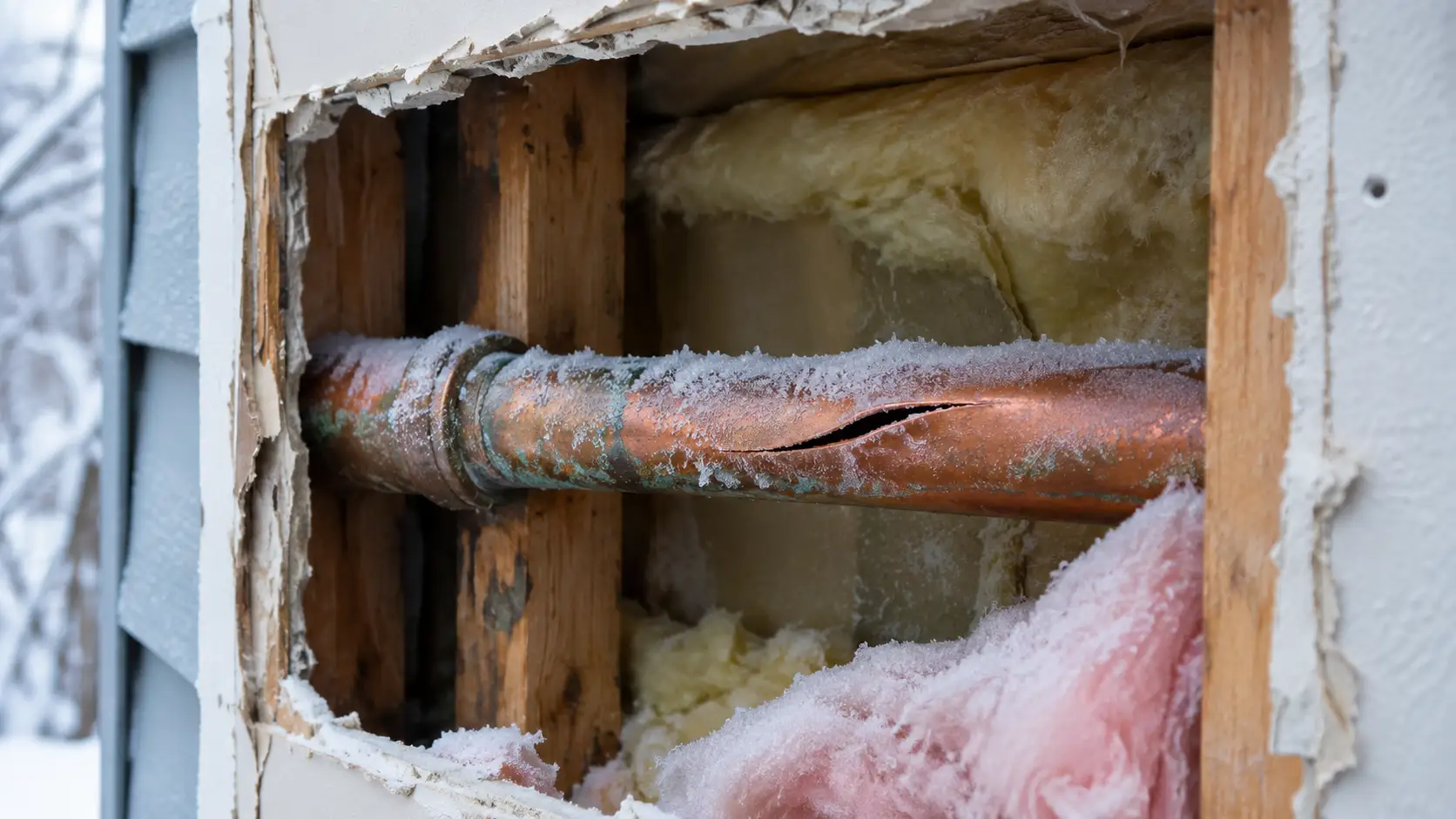
Water spraying from a line, dripping through a ceiling or pooling under a sink is the one plumbing problem that gets worse by the minute. Close the main shut off valve first, then call us for burst pipe repair in Cheyenne and a local technician can come out to find the break and repair it.
The first five minutes after a pipe bursts
A half inch supply line under normal house pressure can put out several gallons a minute. Most of the damage from a burst pipe happens before anyone touches a wrench, so the order you do things in matters more than anything else.
Close the main shut off valve
It is usually where the water line comes through the basement or crawl space wall, near the meter. Turn a round handle clockwise until it stops, or turn a lever a quarter turn so it sits across the pipe. Our guide to shutting off your water shows the common spots.
Make the area safe
If water is near outlets, a power strip or the electrical panel, switch off the breaker for that area from a dry spot. Never stand in water to reach a switch.
Open a faucet on the lowest floor
This drains the water still sitting in the lines so the break stops dripping sooner and the pressure drops off.
Call Plumber Cheyenne
Tell us where the water is coming from, how long it ran and what kind of pipe you can see. A local technician can come out to find the break and repair it.
If the main valve will not turn
Old gate valves seize. Do not force the handle with a wrench, because a snapped stem makes the leak worse. Call us and say the valve is stuck, and the technician can close the water at the curb stop.
What burst pipe repair in Cheyenne covers
Burst pipe repair is more than patching one hole. The technician finds where the water actually came from, which is not always where it shows up, and checks the rest of the run for the same weakness.
A repair usually means cutting out the damaged length and joining in new pipe. On copper that can be a soldered or press fitted section. On PEX it is often a crimp or expansion fitting. Galvanized steel that has burst is often too corroded nearby to hold a new joint, and the technician will tell you if the run around it is worth replacing.
Before the water goes back on, the line is put back under pressure and checked for drips at every new joint. Then each fixture on that branch is run so trapped air clears out.
Signs a pipe has burst or is about to
Act right away
- Water spraying or pouring. Shut the main right away and call.
- Water through a ceiling or light fixture. Turn off that circuit and the main, then call.
Get it seen today
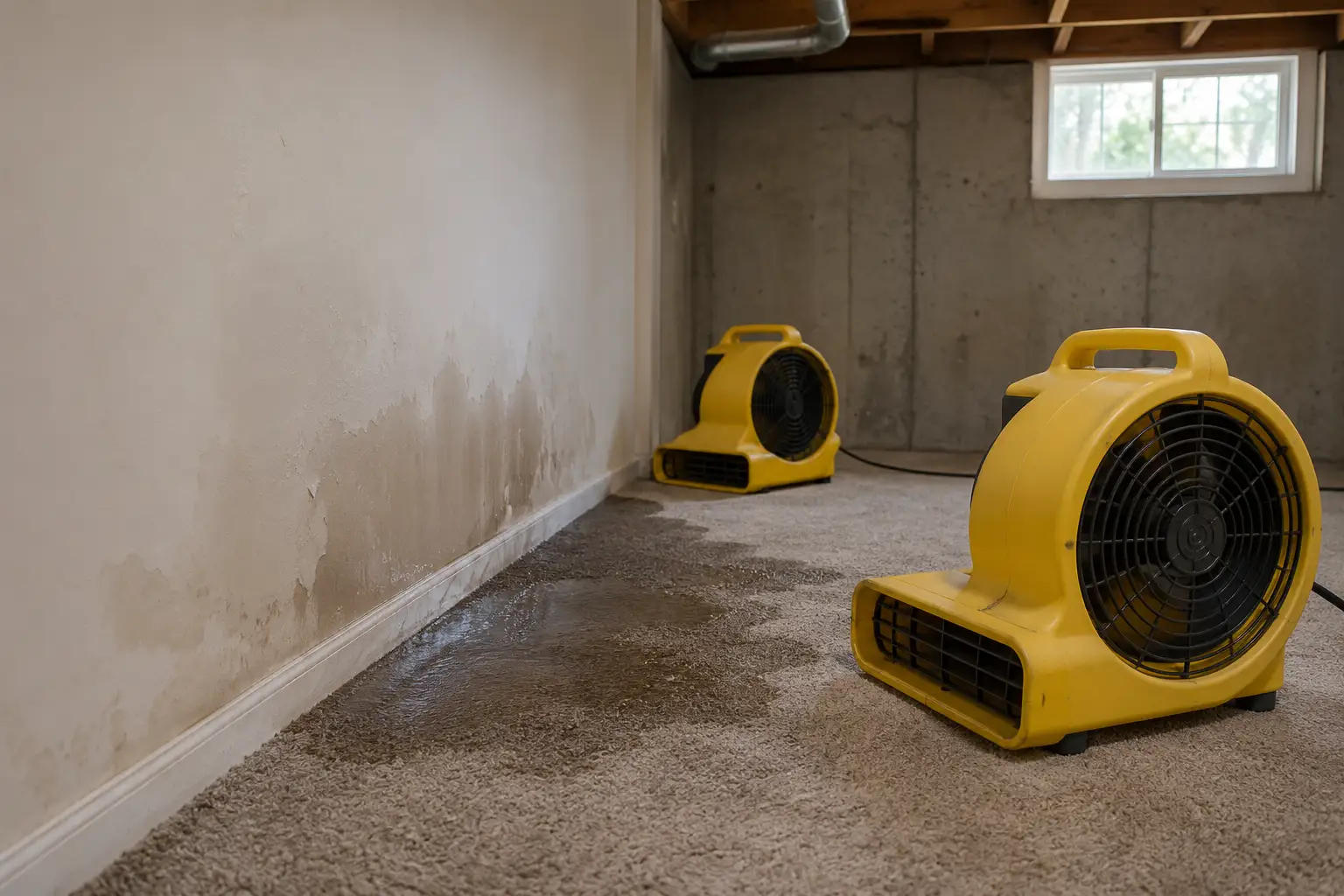
- A wet patch spreading on drywall. A slow leak inside the wall is still soaking the framing.
- The meter spins with every tap closed. Water is going somewhere you cannot see.
Can wait a few days
- A small drip at a fitting under a sink. Put a bowl under it and book a repair soon.
- Banging pipes when a valve closes. Worth a look before it loosens a joint.
Low water pressure on one side of the house after a cold night is also a warning. A section of line may be frozen, and frozen pipes often split when they thaw. Read frozen pipe repair before you put heat on one.
Why pipes burst in Cheyenne homes
Most bursts we hear about come from a short list of causes. Knowing which one you have helps the technician decide between a spot repair and replacing a longer run.
| Cause | What happens | What usually fixes it |
|---|---|---|
| Freezing | Water expands as it freezes and splits the pipe, usually in a wall, garage or crawl space. | Cut out the split section, then insulate or reroute the line. |
| Age and corrosion | Galvanized steel rusts from the inside until a thin spot gives way. | Replace the failed length, and plan for the rest of the run. |
| High water pressure | Pressure above what the fittings were made for strains every joint. | Repair the break and check or add a pressure reducing valve. |
| Failed fittings | A compression nut, push fitting or old solder joint lets go. | Remake the joint with a new fitting. |
| Physical damage | A nail, a screw or a shifting foundation punctures the line. | Open the wall, repair the pipe and protect it with a plate. |
Burst pipe or something that can wait?
Treat it as an emergency
- Water is spraying, pouring or coming through a ceiling
- You cannot find or close the main shut off valve
- Water is near the electrical panel or outlets
- A line split during freezing weather and other pipes are in the same cold spot
Usually fine to book a visit
- A slow drip at a fitting you can catch in a bowl
- A stain that is dry to the touch and not growing
- Noisy pipes with no leak
- A valve that weeps only when it is opened or closed
When in doubt, close the main and call. A few hours without water is far easier to live with than a wet subfloor.
What happens when the technician arrives
- Find the source. The technician traces the water back to the break, which may mean a small opening in drywall.
- Explain the options. You hear what failed, what the repair involves and whether nearby pipe should be replaced. Nothing starts until you say go ahead.
- Repair the line. The damaged section is cut out and replaced with new pipe and fittings that match the system.
- Test and restore. The water goes back on slowly, every new joint is checked, and air is bled from the fixtures.
Drywall, flooring and insulation that got wet are a separate job. The technician can point out what got soaked so you can dry it out quickly, which matters in a finished basement.
Questions worth asking about the repair
- What made this pipe fail, and is the rest of the run likely to fail the same way?
- Is the repair the same material as the existing pipe, or a different one?
- Should the line be insulated or moved away from the cold spot?
- Is my house water pressure too high?
- Does the main shut off valve need replacing while the water is already off?
If you want to prepare for the call, the emergency checklist lists what to note down while you wait.
How to keep it from happening again
Winter is when most Cheyenne pipes give out, and a few habits go a long way. Keep the heat at a steady setting at night and when you travel. Open sink cabinet doors on outside walls during a cold snap so warm air reaches the lines. Disconnect garden hoses in the fall, and insulate any pipe that runs through a garage, crawl space or exterior wall. The guide on keeping pipes from freezing covers each step.
Year round, learn where your main shut off valve is and make sure it turns. A valve that has not moved in twenty years is the one that sticks on the worst day.
Questions people in Cheyenne ask
What should I do first when a pipe bursts?
Close the main water shut off valve, switch off power to any wet area from a dry spot, open a faucet on the lowest floor to drain the lines, and then call Plumber Cheyenne.
Can I tape a burst pipe until someone comes?
Repair tape or a rubber patch with a hose clamp can slow a small pinhole for a short time, but it will not hold house pressure on a split. Keep the main closed until the repair is done.
How do I know if a pipe burst inside a wall?
Look for a damp or bulging patch of drywall, peeling paint, a musty smell, the sound of running water with every tap closed, or a water meter that keeps moving.
Do I need to replace all my pipes after one bursts?
Not always. A pipe that split from freezing can often be repaired in one spot. Corroded galvanized pipe is different, and the technician will tell you if more of it is near failure.
Will the water be off for long?
Usually only for the repair itself. The water is turned back on once the new section is in place and tested, so you can use the rest of the house again.
Is a burst pipe covered by homeowners insurance?
That depends on your policy and on what caused the break. Take photos of the damage before cleanup and call your insurer, since many policies ask to be told quickly.
Burst pipe repair across Cheyenne
We take calls from every part of Cheyenne, whether the house is a century old or a few years old. Tell us your street when you call so the technician knows where to go.
ZIP codes 82001, 82007, 82009