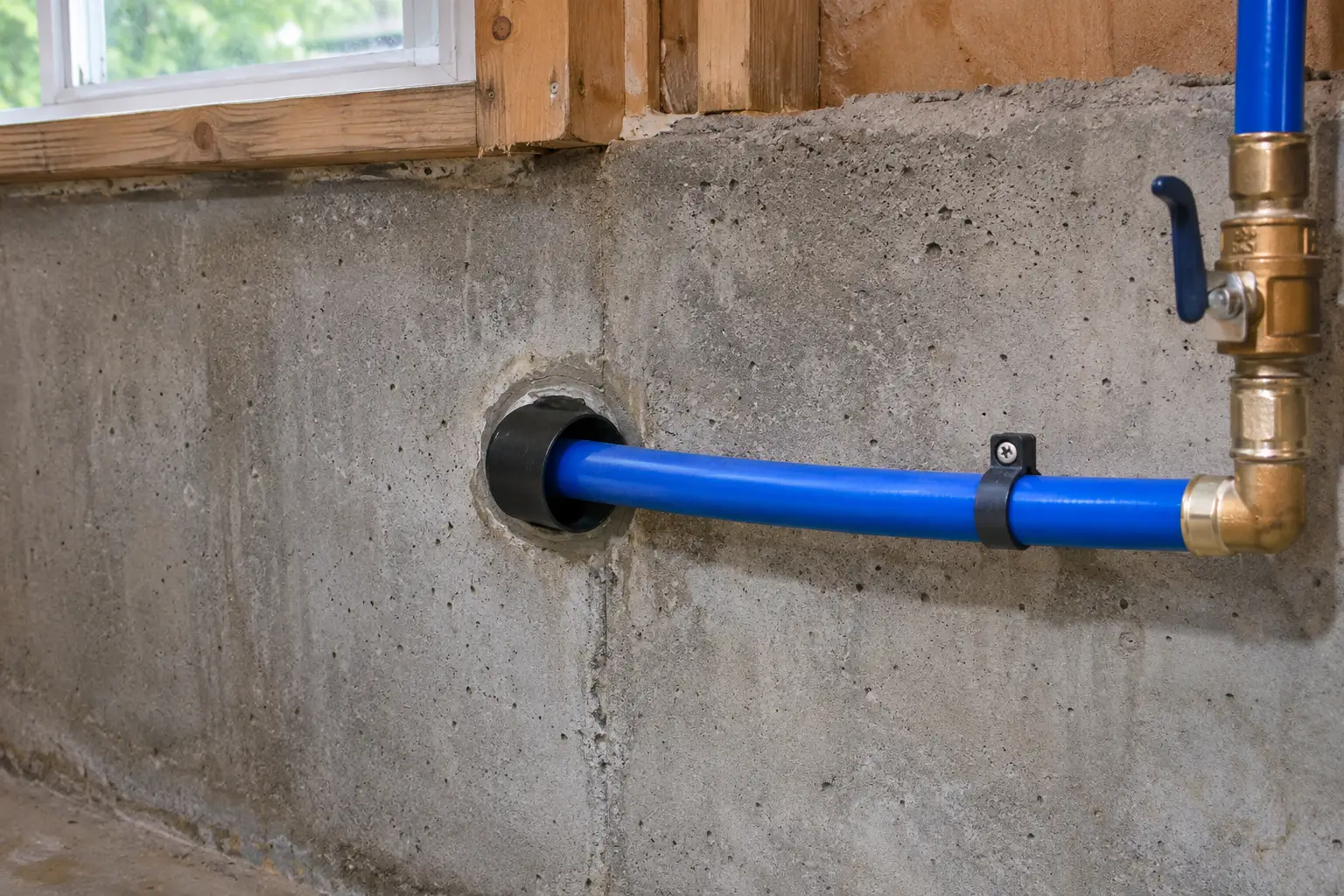
The main water line is the buried pipe that carries water from the curb stop near the street into your house. When it leaks, you may see a wet patch in the yard, lose pressure at every faucet or watch the meter spin with nothing on. Call us for water line repair in Cheyenne and a local technician can come out to find the problem and talk you through the fix.
What to do first when the main line leaks
A broken service line can waste a lot of water and soften the ground under a driveway or foundation. These steps keep things under control until the line is repaired.
Confirm it with the meter
Turn off every fixture and look at the meter. If it still moves after you close the main valve inside the house, the leak is on the buried line outside.
Close the main if water is inside
If water is coming into the basement where the line enters, close the main shut off valve. The shut off guide shows where it usually sits.
Keep off the wet ground
Do not park on a soggy spot and keep kids and pets away from any sinkhole or soft patch near the sidewalk.
Call Plumber Cheyenne
Tell us what you see in the yard, what the meter did and how old the house is. A local technician can come out to locate the leak.
Do not start digging on your own
Gas, power and phone lines are often buried near the water line. Any digging needs the underground utilities marked first by calling 811, and the technician handles that as part of the job.
What water line repair in Cheyenne covers
Your service line runs from the curb stop, a valve near the property line, to the main shut off valve where the pipe enters the house. Water line repair covers anything along that stretch.
Signs your main water line is failing
Act right away
- Water bubbling up in the yard or at the curb. Call now. The line is likely broken.
- Water coming through the basement wall where the line enters. Close the main valve and call.
Get it seen today
- The meter moves with the main valve closed. The leak is outside, on the buried line.
- Pressure dropped at every faucet at once. A leak or a crushed section is likely.
Can wait a few days
- Rusty water when you first open a tap. Galvanized pipe may be wearing out.
- One spot of lawn stays greener than the rest. A slow leak can water the grass from below.
A wet patch that never dries out, even on a warm summer afternoon, is the classic sign of a leaking service line. The water follows the trench the pipe was laid in, so the soggy spot is not always right on top of the leak.
In winter the signs are harder to see. Snow that melts in one strip across the yard, or ice forming on the sidewalk when everything else is dry, can point to warm or moving water underground.
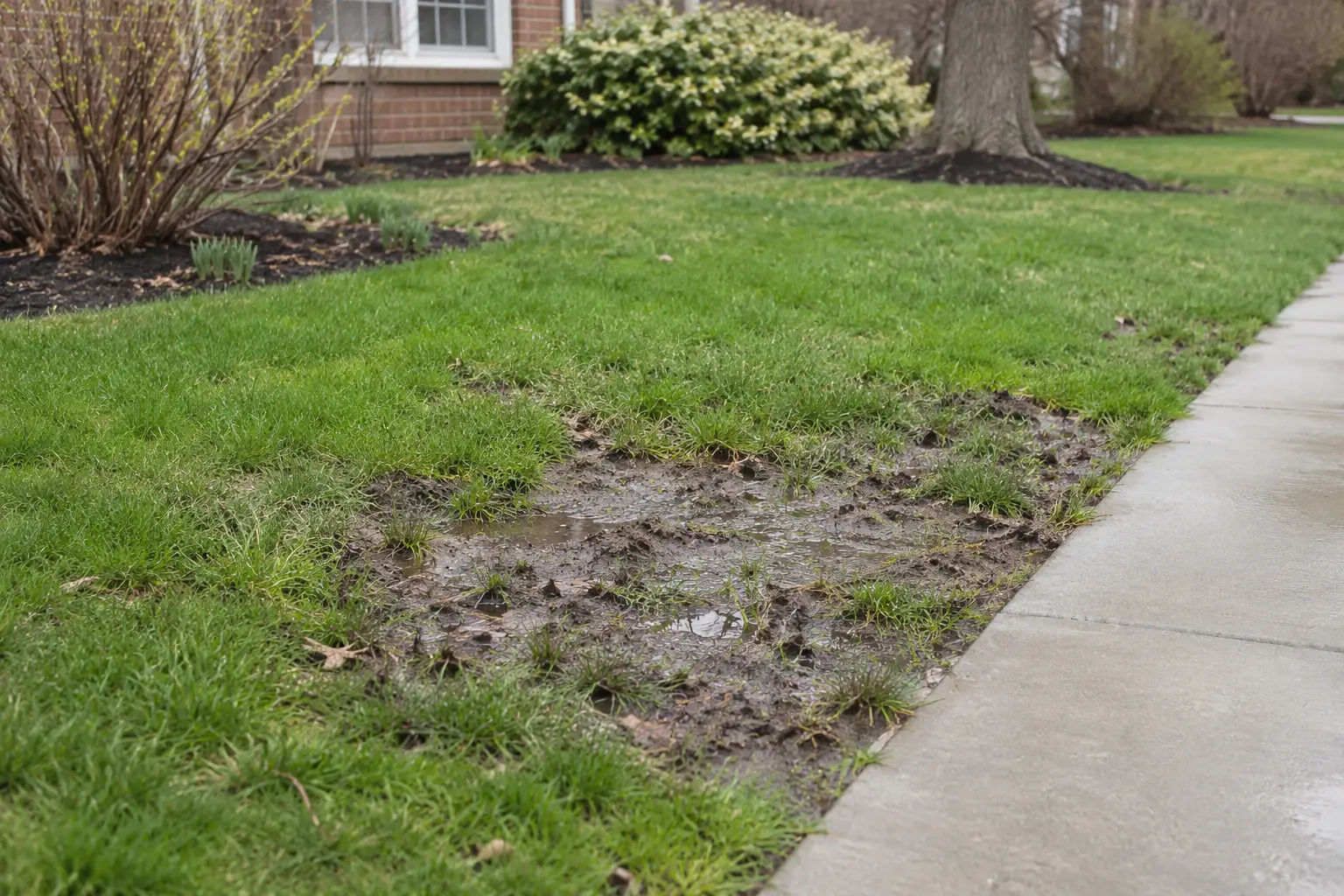
Not every pressure problem is the service line. If only one fixture is weak, the cause is usually closer to it. Our guide on why water pressure is low helps you tell the difference.
Why service lines fail
The age and material of the pipe tell the technician a lot. Here are the causes that come up most often.
| Cause | What happens | Usual fix |
|---|---|---|
| Corroded galvanized pipe | Rust builds up inside, flow drops and thin spots start to leak. | Replace the line, since the rest is usually close behind. |
| Freezing | A shallow section or the part inside a cold crawl space freezes and splits. | Repair the split and protect or lower that section. |
| Ground movement | Frost heave and settling soil pull joints apart or crack older pipe. | Repair the joint or replace the damaged length. |
| Tree roots | Roots wrap and squeeze the line or work into a leaking joint. | Repair the section and move the line if possible. |
| Old fittings | Couplings and compression joints wear out and start to seep. | Remake the joint with new fittings. |
| Digging damage | A fence post, sprinkler trench or landscaping job hits the line. | Cut out the damaged piece and splice in new pipe. |
Repair one section or replace the whole line?
A single leak on a fairly new line can often be fixed by opening a small hole over the leak and splicing in a new piece. When the line is old galvanized steel, or has leaked more than once, replacing it end to end usually makes more sense than chasing one leak after another.
Ways to put in a new line
A new service line can go in an open trench, or in some yards it can be pulled or bored underground between a pit at the curb and the basement wall, which disturbs far less lawn and concrete. The technician looks at the soil, the driveway and the path of the old pipe before suggesting either one.
Staying below the frost line
Cheyenne winters push frost deep into the ground. Any new or repaired section has to sit low enough that the soil around it never freezes, and the spot where it comes up into the house needs to stay warm. A line that runs too shallow is a common reason the same pipe freezes winter after winter.
Which part of the line is yours?
In most places the homeowner is responsible for the pipe from the curb stop to the house, and the water utility handles the side toward the street main. If you are not sure where your part begins, ask the water utility before work starts.
Emergency or a scheduled repair?
Call right away
- Water is flowing up through the ground or the street gutter
- Water is entering the basement where the line comes in
- A sinkhole or soft spot is opening near the driveway or foundation
- You have no water at all and the neighbors do
Usually fine to book a visit
- A small damp spot that stays the same size
- Pressure that has slowly dropped over months
- A main valve that is hard to turn but not leaking
- Rust colored water that clears after a minute
What the technician does on the visit
- Test the line. Meter readings, pressure checks and valve tests show whether the problem is in the buried line or inside the house.
- Locate the leak. Listening equipment helps pin down the spot underground so the dig stays as small as possible.
- Explain the choices. You hear what failed, whether a spot repair will hold and what replacing the line would involve. Nothing starts until you agree.
- Mark and dig. Underground utilities are marked first, then the line is exposed at the leak or along the path for a new pipe.
- Repair and restore. The line is repaired or replaced, flushed, put back under pressure and checked at the meter before the trench is filled.
Questions worth asking before work starts
- What is my service line made of, and how much life is left in it?
- Is a spot repair likely to hold, or will another leak show up soon?
- How deep will the new section be, and will it stay below the frost line?
- Will the main shut off valve or the pressure reducing valve be replaced too?
- Does this work need a permit or an inspection?
- How much of the lawn, driveway or sidewalk has to be opened?
Before the technician arrives, the emergency checklist covers what to note down and how to keep the house safe.
Protecting your service line year round
- Know where your main shut off valve is and turn it once a year so it does not seize.
- Keep the spot where the line enters the house warm and insulated through winter.
- Call 811 before planting trees, setting fence posts or adding sprinkler lines.
- Watch for a sudden jump in water use or a damp spot that stays wet.
- Have high house pressure checked, since it strains the line and every joint inside.
If pipes inside the house are also old, ask about repiping at the same time. A hidden leak you cannot place is a job for leak detection first.
Questions people in Cheyenne ask
How do I know if my main water line is leaking?
Turn off every fixture and close the main shut off valve inside the house. If the water meter keeps moving, water is leaking from the buried line outside. A soggy patch of lawn and weak pressure at every faucet often show up at the same time.
Can a water line be replaced without digging up the whole yard?
Often, yes. In many yards a new line can be pulled or bored underground between a small pit near the curb and the basement wall. Soil, rock, the driveway and where the old pipe runs all affect whether that will work, and the technician explains the options.
What material is used for a new service line?
PEX, copper and polyethylene are common choices for a new service line. Each handles freezing and ground movement a little differently. The technician will suggest a material based on your house, the soil and what the existing connections are.
Why does my water line keep freezing?
Usually because part of it sits too shallow or passes through a cold crawl space or garage before reaching heated space. Lowering that section, insulating it or keeping the area warmer fixes the cause. Read frozen pipe repair if the line is frozen now.
Is the water line from the street my responsibility?
In most places the homeowner owns the pipe from the curb stop to the house, and the water utility owns the part toward the street main. Ask the water utility if you are unsure where the split is on your property.
Will I have water while the line is being repaired?
The water has to be off while the line is open. It goes back on once the new section is in place, flushed and tested, so the time without water depends on whether it is a spot repair or a full replacement.
Service line work across Cheyenne
We take calls about water lines from every part of Cheyenne in 82001, 82007 and 82009. Tell us your street and what you see in the yard so the technician knows what to bring.
ZIP codes 82001, 82007, 82009