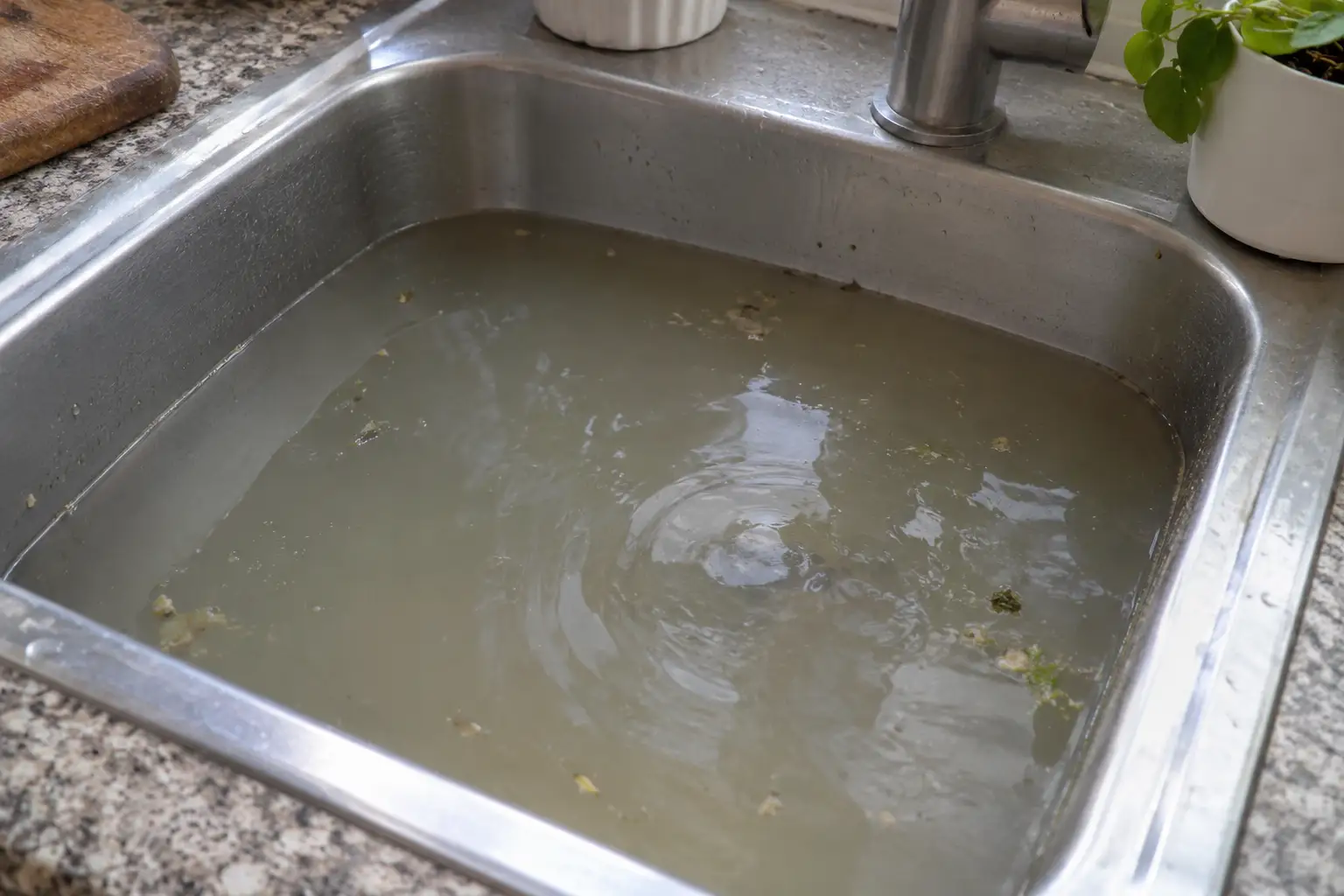
A sink that holds gray water, a tub that drains in slow circles or a floor drain that gurgles when the washer empties all point to a clog. Drain cleaning in Cheyenne clears the line itself, not just the first few inches, so water runs again and keeps running. Stop using the drain and call us if more than one fixture is backing up.
Before you call, check how many drains are slow
Run water in another fixture
If only one sink or tub is slow, the clog is in that branch. If a toilet gurgles when the washer drains, or water rises in the tub when you flush, the blockage is further down in the main line.
Stop using the problem drain
More water only packs the clog tighter and can send dirty water over the rim.
Try a plunger, gently
A cup plunger on a sink or tub, with the overflow opening covered by a wet rag, can loosen a soft clog. Stop if nothing moves after a few tries.
Call Plumber Cheyenne
Tell us which drains are slow and what you have tried. A local technician can come out and clear the line.
Skip the chemical drain cleaner.
Caustic cleaners rarely clear a real blockage, they can eat at older pipes and plastic traps, and they sit in the line right where the technician has to work. If you already poured some in, tell us when you call.
What drain cleaning in Cheyenne covers
Every drain in the house can clog, and each one tends to clog for its own reasons. Drain cleaning reaches past the trap to wherever the blockage actually sits.
Kitchen clogs are the most common call, and they build slowly. Warm grease goes down as a liquid, cools in the pipe and catches food bits until the line narrows to a pencil sized opening.
The holiday season makes it worse. Big meals mean more grease, more peels in the disposal and more dishes in a short stretch. If your sink fills when the dishwasher drains, the clog is usually in the line behind the wall, not in the trap.
Clearing it properly means reaching that buildup and cleaning the pipe walls, not just poking a hole through the middle. Garbage disposal repair covers the unit itself.
Signs your drains need cleaning
Act right away
- Sewage coming up a floor drain or tub. Stop all water use. The main line is backing up.
- Water rising in the shower when the toilet flushes. The main line is blocked. Call before using more water.
Get it seen today
- Several drains slow at once. A clog further down is affecting a whole branch.
- Gurgling from a toilet or tub when another fixture drains. Air is being pulled through a partly blocked line.
Can wait a few days
- One sink draining slowly. Try a plunger, then book a cleaning if it stays slow.
- A sour smell from a drain. Buildup in the trap or line. Worth cleaning before it clogs.
What usually causes the clog
| Where | Common cause | How it is cleared |
|---|---|---|
| Kitchen sink | Grease, starches and coffee grounds | A cable through the line, or water jetting for heavy grease |
| Bathroom sink | Hair and soap mixed with toothpaste | Clean the trap and stopper, then cable the branch |
| Tub and shower | Hair wrapped in soap film | Pull the clog from the drain, then clean the line |
| Toilet | Wipes, too much paper, small objects | A closet auger worked through the bowl |
| Floor drain | Lint, sand and debris from laundry or a flood | Cable the drain and flush it with water |
| Main sewer line | Tree roots, grease and sagging pipe | A cable with a cutting head or hydro jetting, often with a camera check |
If the same drain clogs again within a few months, the trouble is often in the pipe itself. A sewer camera inspection shows roots, a sag or a cracked section that cleaning alone will not fix.
Cable or water jet? How the line gets cleared
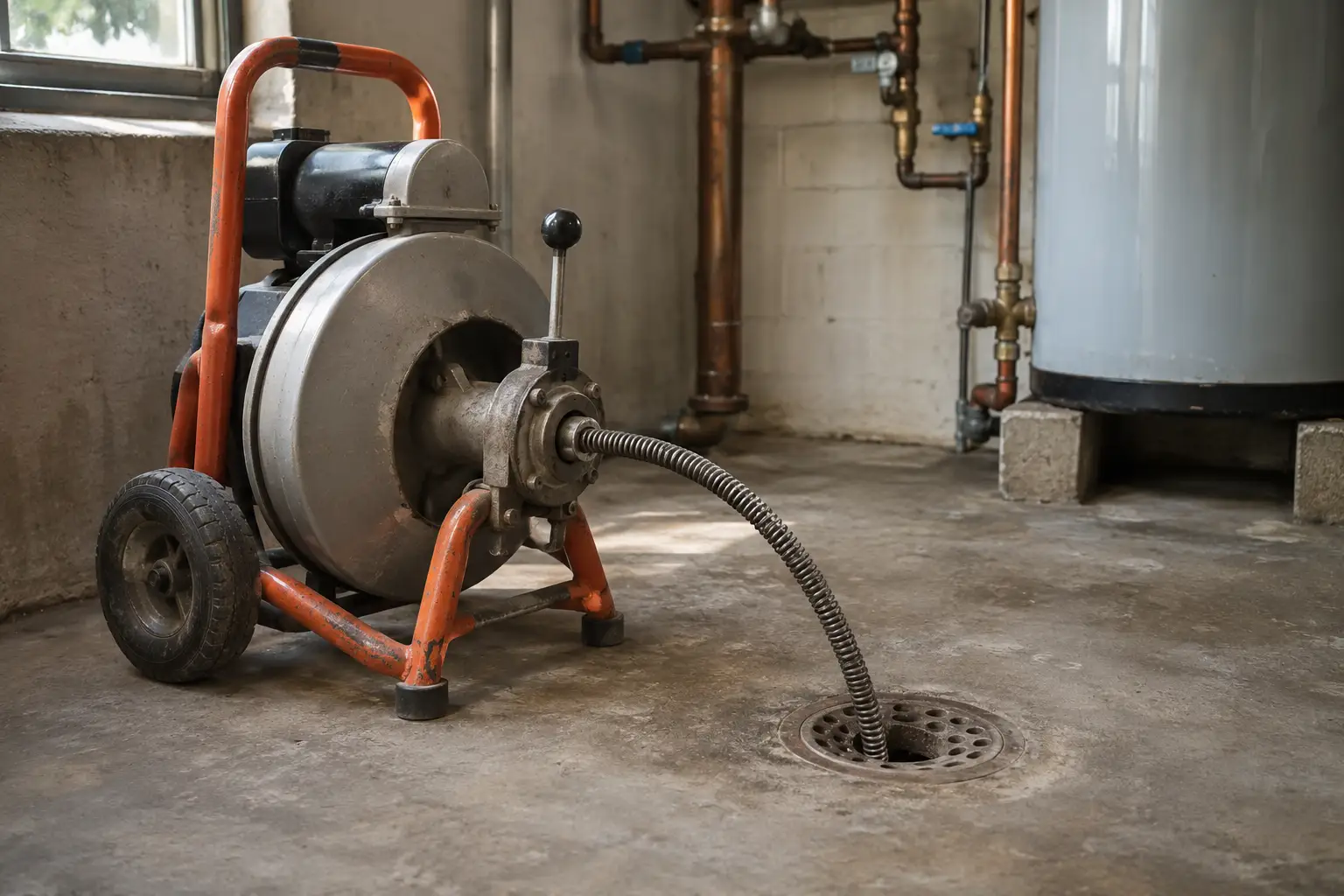
Most clogs are cleared with a drain cable, also called a snake or an auger. A spinning cable with a cutting or grabbing head is fed into the drain until it reaches the blockage, then breaks it up or pulls it back out.
For grease that coats the whole pipe, or roots that keep growing back, the technician may suggest hydro jetting. A high pressure hose scours the pipe walls clean. It suits pipe in sound condition and is the wrong tool for a line that is already cracked.
Older homes with cast iron drains can carry heavy scale inside. The technician looks at the pipe material, whether PVC, ABS or cast iron, before choosing a method.
What to expect from the visit
- Questions first. Which drains are slow, how long it has been going on and whether anything was poured in.
- Find the right access point. That might be the fixture drain, a cleanout in the basement or yard, or pulling a toilet for a main line clog.
- Talk through the options. The technician explains what they found and what clearing it involves. Nothing starts until you agree.
- Clear the line. The cable or jet goes in and the clog comes out.
- Run water to test. Each affected fixture is run so you can watch it drain normally before the technician leaves.
Questions worth asking the technician
- Where was the clog, and what was it made of?
- Was it in a branch line or the main line?
- Is the pipe in good shape, or would a camera look be worth it?
- Is there a cleanout I should know about for next time?
- What should we stop putting down this drain?
Keep the emergency checklist handy for the day a backup arrives without warning.
Keeping drains clear between cleanings
- Kitchen. Wipe greasy pans with a paper towel before washing, and scrape plates into the trash. Run cold water while the disposal is on.
- Bathrooms. A simple hair catcher in the tub and shower stops most clogs before they start.
- Toilets. Flush only toilet paper. Wipes labeled flushable still do not break down in the line.
- Laundry. A lint trap on the washer hose keeps fibers out of the floor drain.
- Holidays. Go easy on the disposal with peels and starches when you cook big meals.
The guide on when a clogged drain becomes an emergency helps you decide how quickly to act, and the maintenance checklist adds a few seasonal habits.
Questions people in Cheyenne ask
How do I know if the clog is in the main line?
More than one drain is involved. Water comes up in a tub or floor drain when you flush, toilets gurgle when the washer empties, or every drain on the lowest floor is slow. A single slow sink with everything else working is almost always a branch clog.
Are chemical drain cleaners safe to use?
They are best avoided. They seldom clear a solid clog, they can harm older metal pipes and plastic traps, and they leave caustic water sitting in the line. If you used one, tell the technician before any work starts so they can protect themselves.
How often should drains be cleaned?
Most drains only need attention when they slow down. A kitchen line that clogs every year or a main line with root trouble may do better with regular cleaning, and the technician can suggest a schedule based on what they found in the pipe.
Can a plunger damage my pipes?
A plunger used gently is fine on most sinks, tubs and toilets. Use a flange plunger on toilets and a flat cup plunger on sinks. Do not plunge a drain after pouring in chemical cleaner, since it can splash back onto your skin and eyes.
What is a cleanout?
A cleanout is a capped opening in the drain line, usually in the basement, a crawl space or the yard close to the house. It gives the technician a straight path into the main line without pulling a toilet. Knowing where yours is helps during a backup.
Why does my drain smell when it is not clogged?
A dry trap can let sewer gas into the room, which happens with floor drains and guest baths that are seldom used. Pour water into the drain to refill the trap. If the smell stays, buildup in the line or a vent problem may be the cause.
Drain cleaning across Cheyenne
We take calls from houses and rentals all over Cheyenne in 82001, 82007 and 82009. Tell us your address and which drains are slow when you call, so the technician brings the right equipment.
ZIP codes 82001, 82007, 82009