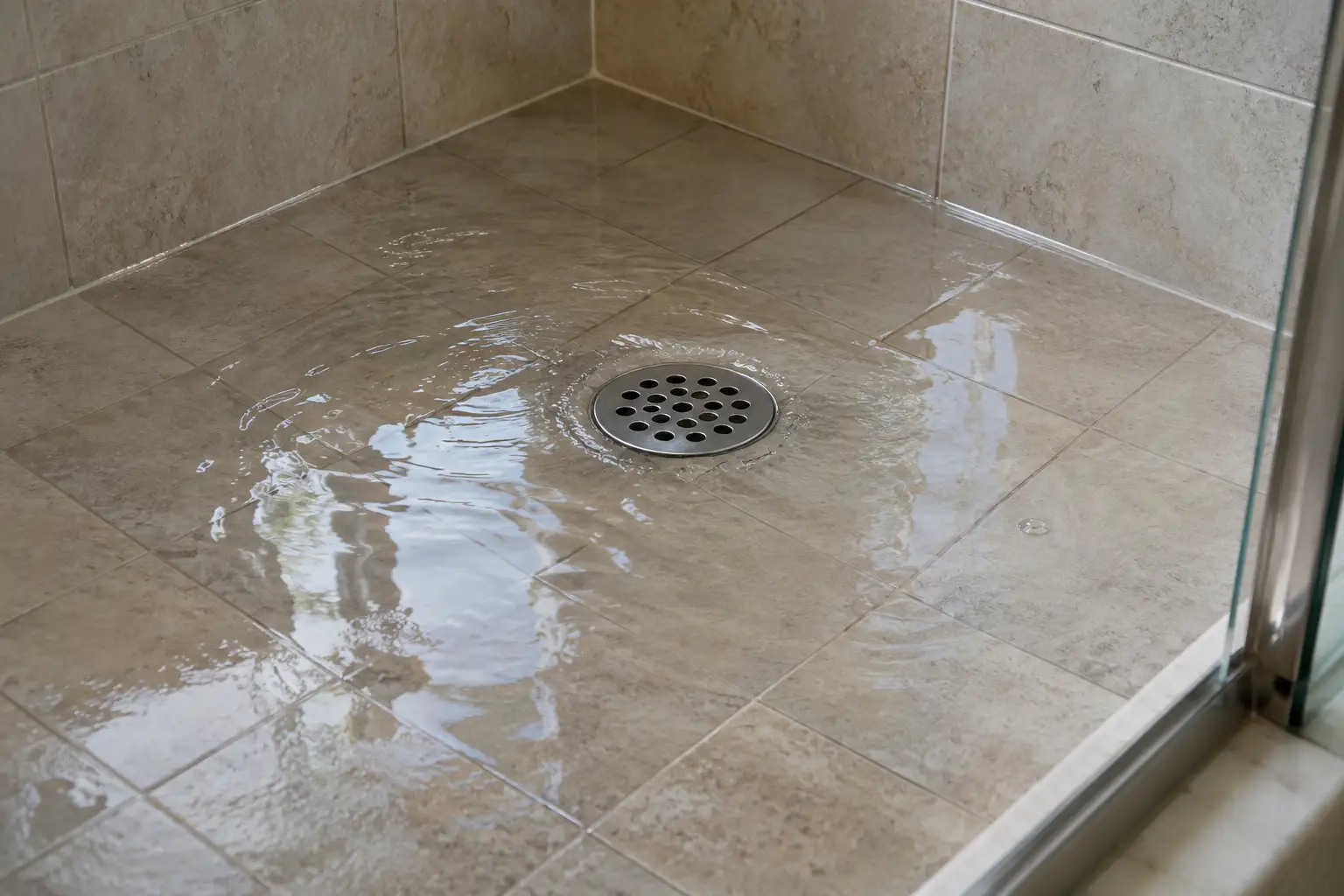
Most clogs are a nuisance. A slow bathroom sink can wait for a quiet weekend and a plunger. But some clogs are a warning that the main sewer line is blocked, and then every flush and every load of laundry pushes waste back into the house. This guide explains when a clogged drain becomes an emergency, what to stop using right away and how far a plunger or snake can safely take you.
The short answer
One slow drain is usually a local clog. Several drains backing up at once, water rising in a shower or floor drain when you flush, gurgling toilets or a sewage smell point to a blocked main line. Stop using water, keep people away from dirty water and call us.
How to tell when a clogged drain becomes an emergency
The single most useful question is how many drains are affected. The answer tells you where the blockage is.
Likely the main line, treat as urgent
- Two or more fixtures are slow or backing up
- Water comes up in a tub, shower or floor drain when a toilet is flushed
- Toilets gurgle or bubble when a sink drains
- The lowest drain in the house overflows
Likely a local clog, can usually wait
- One sink drains slowly but others are fine
- A single toilet clogs and the rest of the house works
- A tub drains slowly because of hair
- Water goes down eventually without backing up elsewhere
Every drain in the house joins one main line on its way out. When that line is blocked, wastewater looks for the lowest opening it can find, which is usually a basement floor drain, a shower or a laundry sink.
Warning signs of a sewer line blockage
Act right away
- Sewage in a floor drain, tub or shower. Stop all water use and call.
- Several drains backing up together. The main line is likely blocked.
Get it seen today
- Gurgling toilets when sinks drain. Air is being pushed through a partial blockage.
- A sewage smell indoors. Gas is escaping from a drain or a dry trap.
Can wait a few days
- One slow sink or tub. Try a plunger or a hand snake first.
- A toilet that clogs now and then. Often a flushing habit or a weak flush.
A sewage smell with no backup can also come from a floor drain whose trap has dried out. Pour a bucket of water into it. If the smell fades, that was the cause. If it stays, have it checked.
Whether your Cheyenne house is a few years old or close to a century old, the same rule holds. One fixture acting up is a local problem. Several fixtures acting up together, especially on the lowest floor, is a main line problem, and waiting rarely makes it better. The emergency checklist lists what to note before you call.
Water coming up in a lower drain
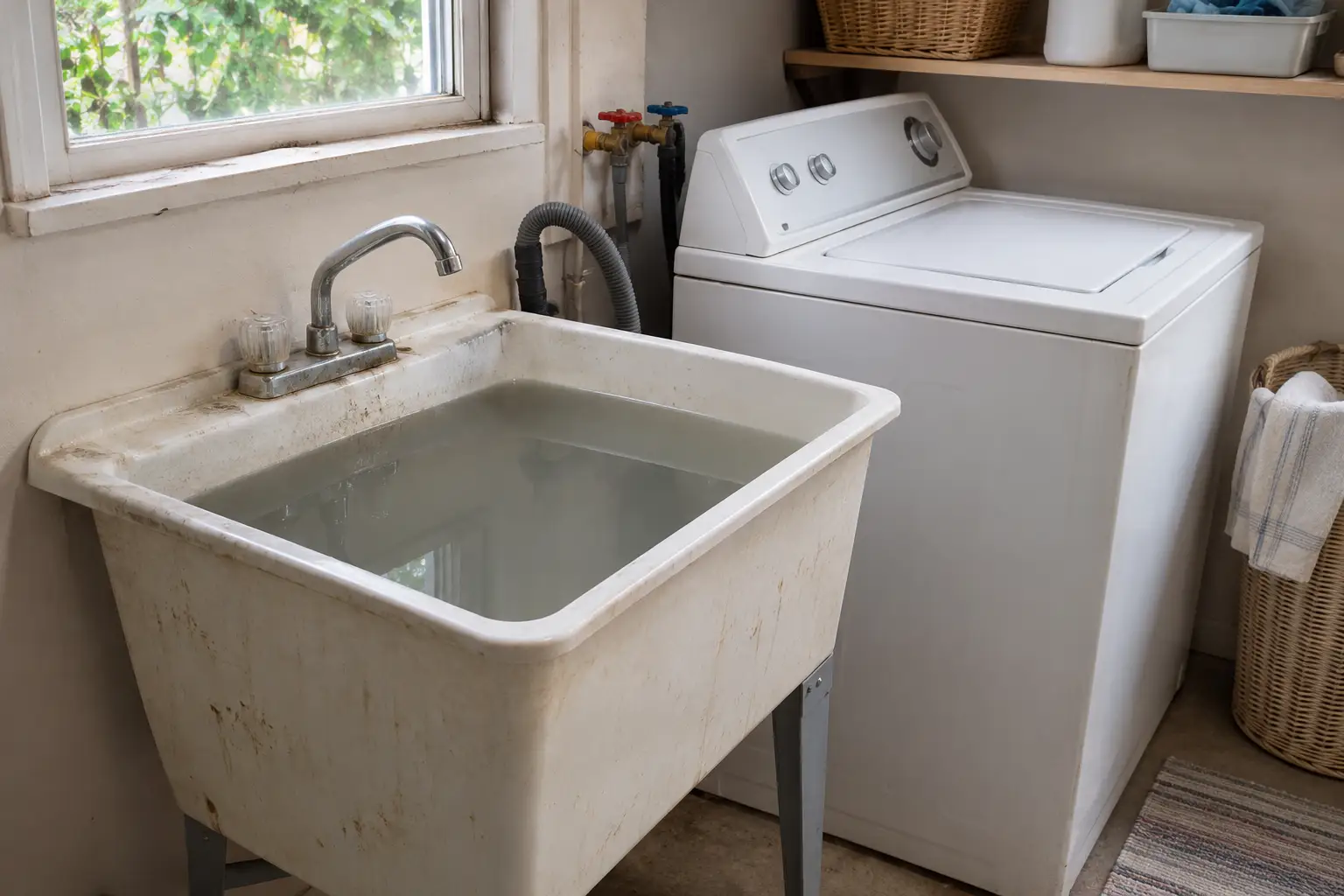
Gray water filling a laundry sink while the washer drains, or a floor drain bubbling up after a shower upstairs, is one of the clearest signs of a main line problem. The water has nowhere to go, so it rises at the lowest point in the house.
Do not run the washer again to test it. Each drain cycle sends many gallons into a pipe that cannot take them. Leave everything off and call us.
If the water is sewage, treat it as contaminated. Keep children and pets away, wear gloves and boots if you must be near it, and wash well afterward.
What to stop using right away
When you suspect a main line blockage, the goal is to put no more water into the drains until it is cleared.
Water you use upstairs ends up downstairs when the main is blocked. A note taped to each bathroom door helps if there are guests or kids in the house.
Holiday season clogs
Kitchen drains clog more often around big holiday meals, in Cheyenne and everywhere else. Roasting pans, gravy and bacon fat get rinsed down the sink, cool in the pipe and harden into a thick plug. Add extra guests, more dishwasher loads and more showers, and an older line that was barely coping gives out.
- Pour cooled grease into a can or jar and put it in the trash.
- Wipe greasy pans with a paper towel before washing.
- Scrape plates into the trash, not the disposal.
- Keep potato peels, rice, pasta and coffee grounds out of the sink.
- Space out showers and laundry when the house is full.
A garbage disposal grinds food, but it does not make grease or starchy scraps disappear. They still travel down the same pipe.
How far a plunger or snake can take you
For a single clogged fixture, a plunger and a small hand snake are worth a try. Use a cup plunger for sinks and tubs and a flange plunger for toilets, with enough water to cover the rubber.
- Stop after a few honest tries. If plunging does not move the clog, more force will only splash dirty water around.
- A hand snake reaches only so far. It can clear a trap or a short branch, not a main line blockage out by the yard.
- Do not rent a large machine for a main line. Without training, the cable can kink, jam in the pipe or damage an old cast iron or clay line.
- Never plunge a drain that has chemical cleaner in it. The splash can burn skin and eyes.
Why chemical drain cleaners are a bad idea
Chemical drain cleaners rarely clear a full blockage, and when they fail they leave a pipe full of caustic water. They can soften PVC and ABS joints, eat at old cast iron and galvanized pipe, and splash onto anyone who works on the drain later.
If you already poured one in, tell the technician when you call and before they open the drain. That keeps everyone safe. For a clean, lasting fix, drain cleaning with a cable machine clears most clogs, and hydro jetting scours grease from the inside of the pipe. If the line keeps backing up, a sewer camera inspection shows roots, sags or breaks, and the technician explains the options before any sewer line repair. If wastewater has already reached the basement, read sewer backup in the basement.
Questions people in Cheyenne ask
Is a clogged drain an emergency?
A single slow drain usually is not. It becomes urgent when several drains back up at once, when water or sewage comes up in a lower drain, when toilets gurgle as sinks drain, or when you smell sewage indoors. Those point to a blocked main line.
Why does my shower back up when I flush the toilet?
The toilet and shower share the same drain line on the way to the main sewer. If that line is blocked, the flushed water cannot get past it and rises out of the nearest low opening, which is often the shower or tub drain.
Can I keep using the toilet if the shower drain is backing up?
No. Every flush adds water to a line that cannot drain, and it will come up in the shower or a floor drain. Stop using all fixtures that drain into the main line until it has been cleared.
Do chemical drain cleaners work on a main line clog?
Rarely. They are made for small clogs near the fixture and usually cannot reach or dissolve a main line blockage. They can also damage older pipes and make the drain dangerous to work on. Skip them, and tell the technician if you used one.
What causes a main sewer line to clog?
Common causes include grease that hardened in the pipe, wipes and paper products that do not break down, tree roots entering through joints, and older cast iron or clay pipe that has sagged, cracked or corroded inside.
Is sewage water from a backed up drain dangerous?
Yes. Treat it as contaminated. Keep children and pets out of the area, wear gloves and rubber boots if you must be near it, avoid touching your face, and wash your hands and clothing well. Throw out soaked items that cannot be cleaned.