A split pipe or a leaking water heater keeps pouring until someone stops the supply. Knowing how to shut off your water in an emergency is the single most useful plumbing skill a homeowner can have. This guide walks through where the main valve usually sits, how each kind of valve turns, and what to try when it refuses to move.
The short answer
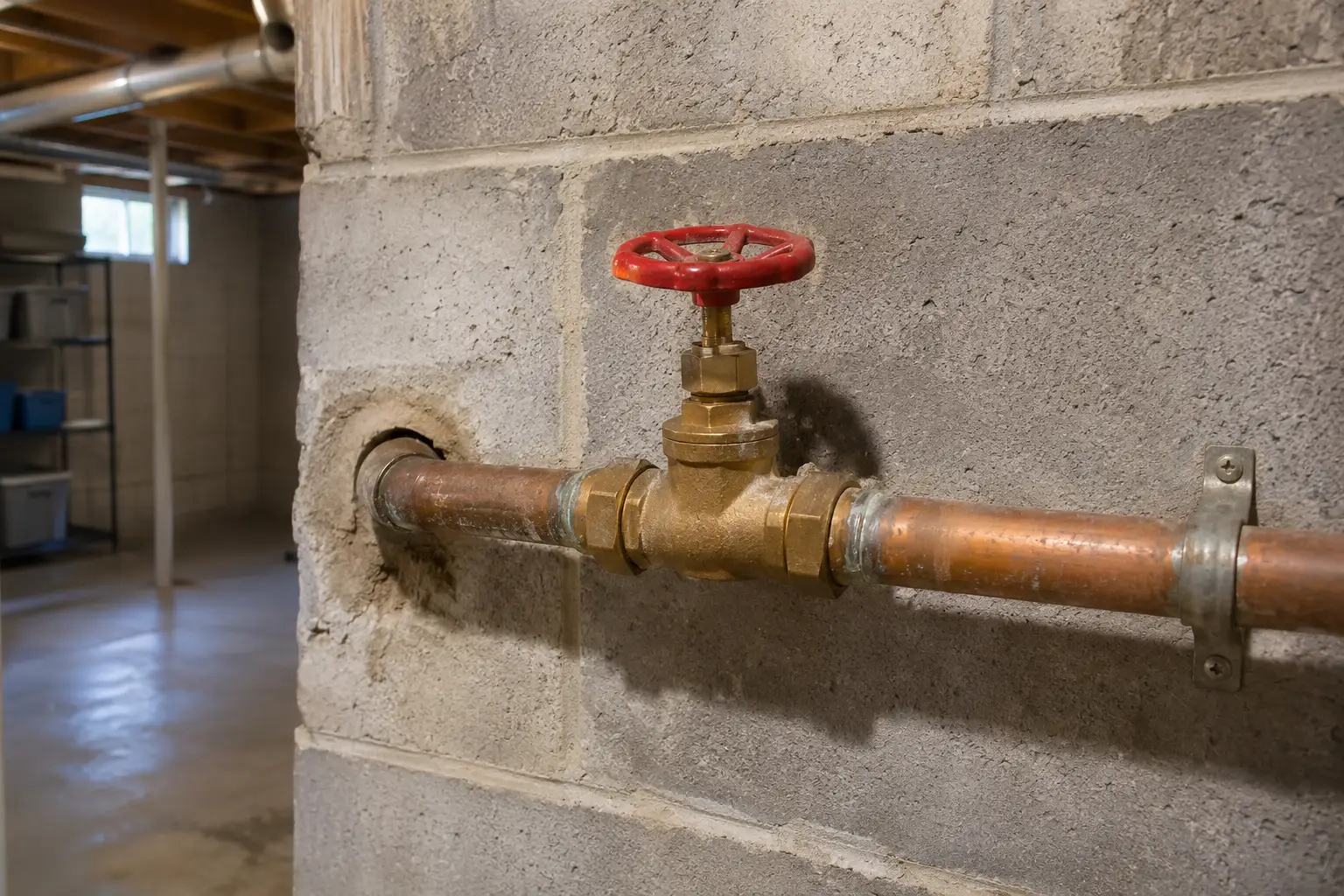
Go to where the water line enters the house, usually a basement wall, crawl space or utility closet near the meter. Turn a round wheel handle clockwise until it stops, or swing a lever handle a quarter turn so it sits across the pipe. Then open a faucet on the lowest floor to drain what is left in the lines.
Steps to shut off your water in an emergency
When water is spraying, people tend to grab towels first. Towels can wait. Every minute the supply stays open, more water reaches the floor, the walls and anything stored nearby.
Go straight to the main valve
Skip the mop. Head for the spot where the supply pipe comes up through the floor or in through the foundation wall. In most Cheyenne basements it is on the wall that faces the street.
Close it fully
A wheel handle takes several full turns clockwise. A lever handle needs only a quarter turn. When the handle stops, you are done. Do not lean on it with a wrench.
Drain the lines
Open the lowest faucet in the house, such as a basement laundry tap or a tub spout. Water sitting in the pipes runs out there instead of through the break.
Shut the water heater supply if it is involved
If the tank itself is leaking, close the cold valve on top of the heater and turn the heater off at the gas control or the breaker.
Call us
Tell us what broke and whether the water has stopped. A local technician can come out to find the problem, repair it and turn the water back on safely.
Gate valves and ball valves work differently
Most homes have one of two valve types on the main line. They look different, turn differently and fail in different ways, so it helps to know which one you own before the day you need it.
| Detail | Gate valve | Ball valve |
|---|---|---|
| Handle | Round wheel, often red or brass | Straight lever, often yellow or red |
| To close | Turn clockwise several full turns | Turn a quarter turn until the lever crosses the pipe |
| How to tell it is shut | The wheel stops turning | The lever sits at a right angle to the pipe |
| Common trouble | Stem seizes or the gate inside breaks off, so it turns but water keeps flowing | Stiff when it has not moved in years, but rarely fails to seal |
| Found in | Older homes and older repairs | Newer homes and recent repiping |
An old gate valve that spins freely without slowing the water has a broken gate inside. Stop turning it and use one of the backup options below. When the water is back on, ask the technician about swapping it for a ball valve.
Where to look for the main shut off
The main valve sits close to where the service line enters the house. Start with these places, in this order.
- Basement. On the front foundation wall, a foot or two above the floor, often beside the meter.
- Crawl space. Just inside the access hatch or near where the line rises out of the ground.
- Utility room or garage. Near the water heater, the water softener or the laundry hookups.
- Slab homes. Sometimes in a closet, behind an access panel or close to the water heater.
If none of these turns it up, follow the cold line backward from the water heater. It usually ends at the main.
Smaller valves that stop one fixture
You do not always need to shut the whole house down. Most fixtures have their own small valve, called a fixture stop or angle stop, that isolates just that spot.
Fixture stops that have not moved in years can stick or start dripping at the stem once you touch them. A drip there is a small problem compared with a flooded bathroom, and faucet and sink repair covers replacing them.
The curb stop is a last resort
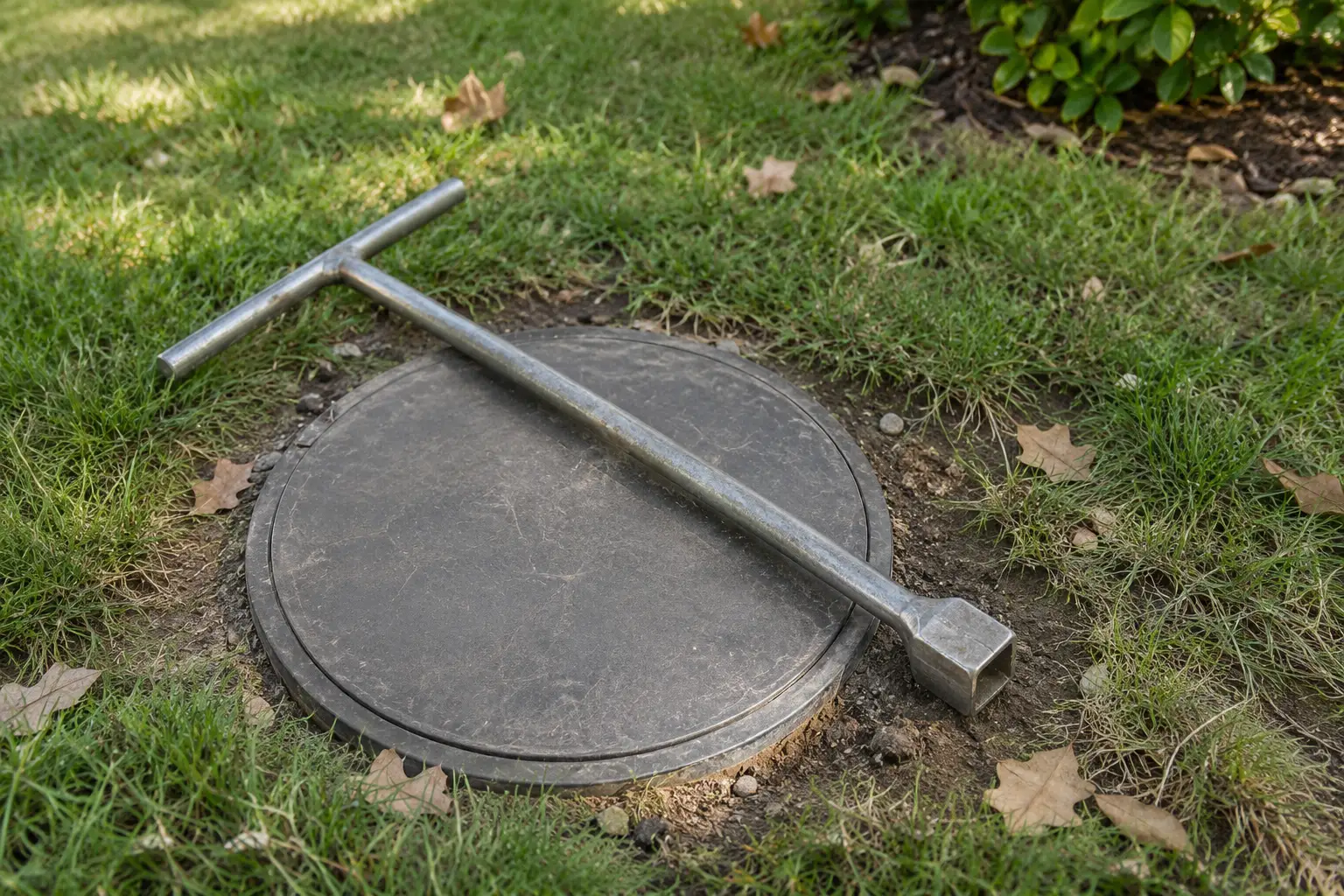
Out by the street or in the yard, there is usually a meter pit or a small round cover over the curb stop. That valve controls the water to the whole property, including the pipe that runs under your lawn.
It takes a long T shaped curb key that reaches down to the valve. Only use it if you own the correct key and know how. Forcing the wrong tool can bend the valve or break the stem, and that becomes a much bigger repair on the water line. If your main valve fails and you do not have a key, tell us when you call and the technician can handle it.
Mistakes that make things worse
- Using a long wrench on a stuck handle. The extra leverage snaps old stems and can crack the valve body.
- Standing in water to reach a switch. If water is near outlets or the panel, shut the breaker from a dry spot only, or wait for help.
- Leaving the water heater burning on an empty tank. Turn it off at the gas control or the breaker if its supply is closed for long.
- Turning the main back on all at once. Open it slowly, a little at a time, so trapped air does not slam the pipes.
- Forgetting which faucets you opened. Close them before the water returns so nothing overflows.
Test your valve before you need it
A valve that has sat open for twenty years is the one most likely to stick on the worst night. Testing it on a calm afternoon takes ten minutes.
- Find the main valve and clear anything stored in front of it.
- Close it, then open a faucet upstairs. The flow should slow to a trickle and stop.
- Open the valve again slowly and check the stem for drips.
- Hang a tag on the handle so everyone in the house can find it.
- Show older kids, roommates or a house sitter where it is and how it turns.
If the valve will not turn, leaks at the stem or never fully stops the water, that is worth fixing before winter. Cheyenne gets hard freezes most years, and a split pipe is when a working main valve matters most. Read how to keep pipes from freezing and the emergency checklist while you are at it.
Questions people in Cheyenne ask
Which way do I turn the main water valve to shut it off?
Clockwise for a round wheel handle, the same direction you tighten a jar lid. For a lever handle, turn it a quarter turn until it sits across the pipe instead of along it. When the lever is parallel to the pipe, the valve is open.
What if I cannot find my main shut off valve?
Check the basement wall that faces the street, the crawl space hatch, the utility room and near the water heater. Follow the cold line from the heater back toward the outside wall. If you still cannot find it, call us and keep a bucket and towels under the leak.
My main valve turns but the water does not stop. Why?
On an old gate valve, the gate inside can break away from the stem. The handle spins and nothing closes. Stop turning it, call us, and the technician can shut the water at the curb and replace the valve with a ball valve.
Is it safe to turn off the water to the whole house?
Yes. Nothing is harmed by a few hours without water. The one appliance to watch is a tank water heater, so turn it off at the gas control or the breaker if the water will be off for a long stretch or the tank is leaking.
Can I use the curb stop myself?
Only with the correct curb key and only if you are comfortable doing it. The valve sits deep in a pit or a narrow pipe, and the wrong tool can damage it. In most emergencies the main valve inside the house is enough.
How do I turn the water back on after a repair?
Close the faucets you opened, then open the main valve slowly over a minute or so. Once it is fully open, run each faucet until the sputtering stops and the flow is steady. Check the repair spot for drips as pressure returns.