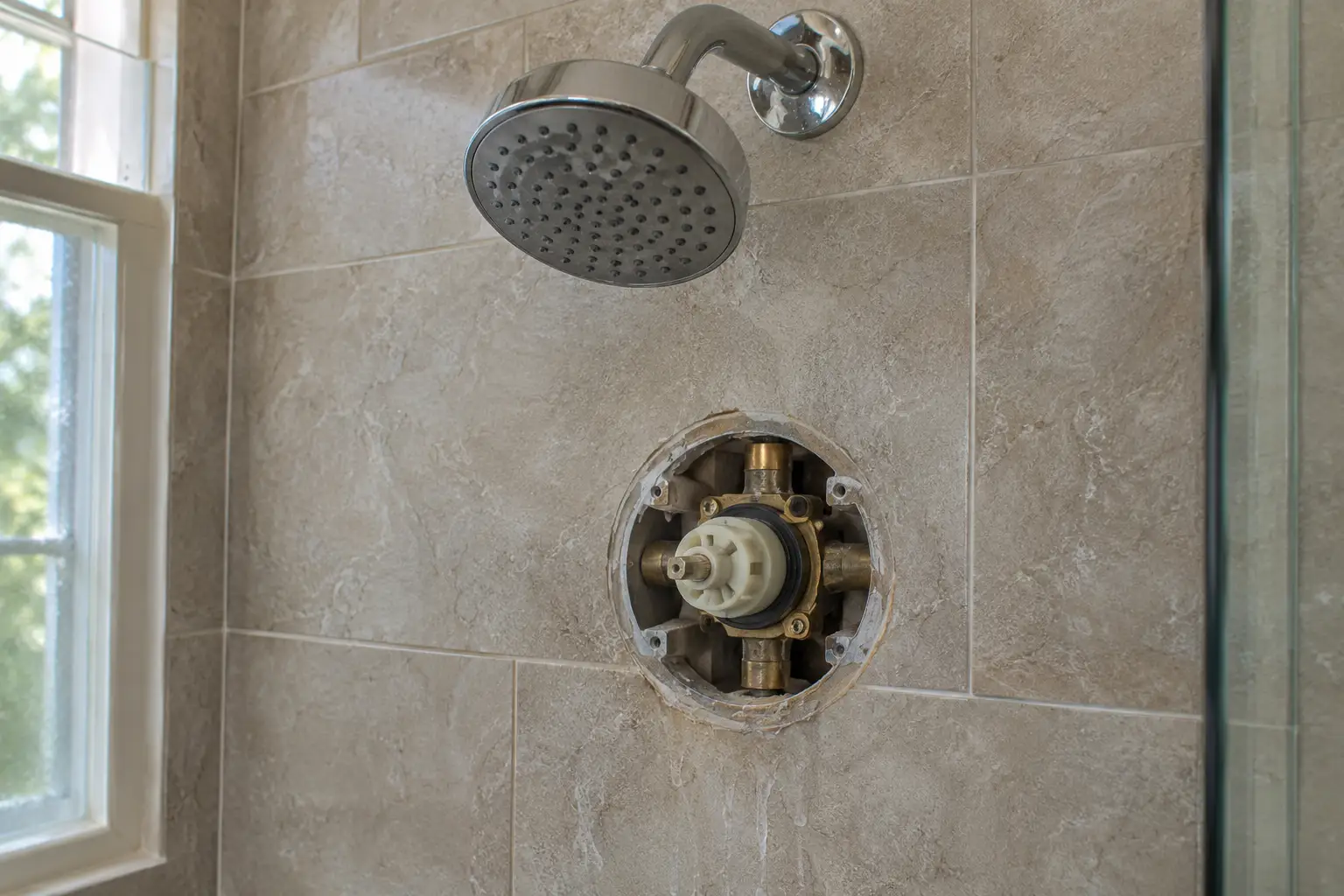
A shower head that drips all night, water that turns scalding when someone flushes, or a tub that takes an hour to drain all come back to a handful of parts inside the wall and under the tub. Call us for shower repair in Cheyenne and a local technician can come out to find which part has worn and fix it without tearing out more tile than the job needs.
Shower repair in Cheyenne, the short version
Most shower and tub problems are slow, not sudden. A few quick checks tell you whether you have a nuisance or something that is soaking the wall right now.
Note what the water does
Is it a steady drip from the head or spout, a temperature that swings, water coming out of the spout and the head at once, or water that will not go down the drain?
Look below the bathroom
Check the ceiling or basement wall under the shower for stains, soft drywall or bubbling paint. That points to a leak inside the wall or under the pan.
Shut the water if it will not stop
If the shower runs with the handle off, close the main shut off valve. The guide on shutting off your water shows where it usually sits.
Call Plumber Cheyenne
Tell us the brand on the handle if you can see one, whether it has one handle or two, and what you noticed. A local technician can come out and take it from there.
Snap a photo of the handle before you call
Valve parts differ by maker and age. A clear picture of the handle and the plate behind it helps the technician bring the right cartridge or stem.
What shower and tub repair covers
Leaks you can see and leaks you cannot
Act right away
- The shower runs and the handle will not shut it off. Close the main valve and call.
- Water dripping through the ceiling below. Stop using the shower, turn off lights in that room and call.
Get it seen today
- Water turns scalding with no warning. Keep children out of the shower until the valve is checked.
- A stain or soft spot under the bathroom. Something inside the wall or pan is wet.
Can wait a few days
- A steady drip from the head or spout. A worn cartridge or washer. Book a repair soon.
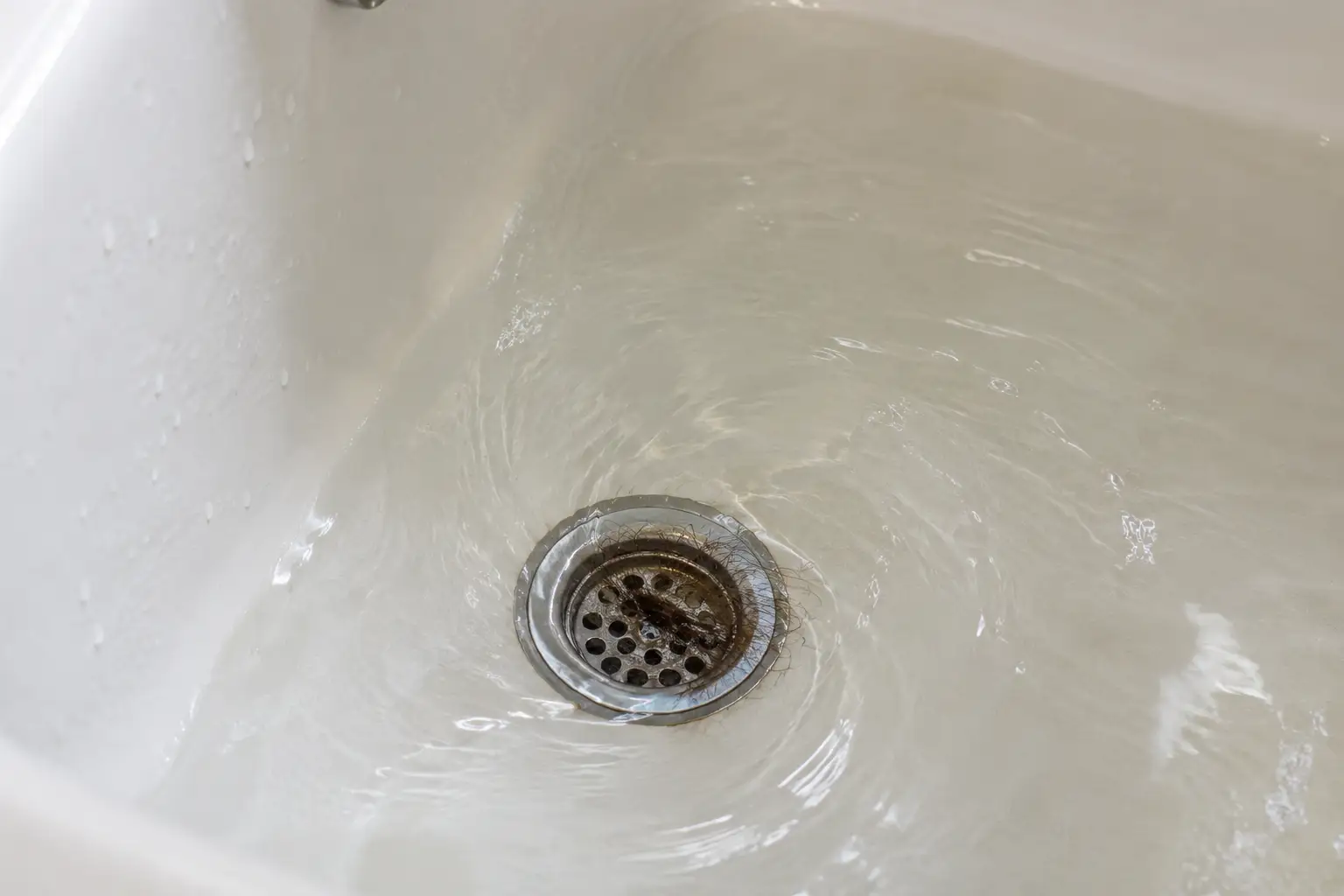
- The tub drains slowly but does drain. A hair clog near the stopper is likely.
Loose tiles, grout that keeps cracking in the same place and caulk that turns black at one corner are quieter signs. Each one can mean water is getting behind the surface every time the shower runs.
When the tub will not drain
A slow tub is almost always hair tangled with soap, caught on the stopper linkage or just below it. On a tub with a trip lever on the overflow plate, the plunger inside can also slip and block the drain partway.
Skip the chemical drain cleaners. They sit in the tub, eat at the finish and make opening the drain risky for whoever does it. If you already used one, say so when you call.
If the tub, the toilet and the bathroom sink all slow down together, the clog is further down the line. That is a job for drain cleaning, and a gurgling toilet or water in the tub when you flush is worth reading about in sewer backup in the basement.
Why showers and tubs act up
| Problem | Usual cause | Usual repair |
|---|---|---|
| Drip from the head or spout | Worn cartridge, washer or valve seat | Replace the cartridge or rebuild the stems. |
| Hot or cold bursts | Stuck or worn pressure balance spool | Clean or replace the cartridge. |
| Water too hot at full turn | Limit stop on the handle set wrong or missing | Set the limit stop and check the water heater setting. |
| Spout runs during a shower | Worn diverter gate in the spout or valve | Replace the spout or the diverter. |
| Stain under the bathroom | Leaking valve body, drain gasket or shower pan | Open an access panel, find the leak, repair it. |
| Weak spray | Mineral buildup in the head or a partly closed stop | Clean or swap the head, open the stops. |
Water behind tile, urgent or not
Call about it now
- The shower will not shut off at the handle
- Water is coming through a ceiling or light fixture
- The temperature jumps to scalding with someone in the house who cannot react quickly
- The floor around the tub is soft or moves underfoot
Fine to book a visit
- A drip you can live with for a few days
- A tub that drains slowly but empties
- A diverter that lets a little water out of the spout
- Caulk that needs redoing with no stain below
Water near a light fixture or an outlet changes the order of things. Switch off that circuit at the breaker from a dry spot before you do anything else, and never stand in water to reach a switch.
Cartridge, stem or a new valve
Most single handle showers use a cartridge that slides into the valve body. When it wears, the shower drips or the handle gets stiff, and a new cartridge usually fixes both. Older two and three handle valves use stems with rubber washers that seal against a brass seat, and those can often be rebuilt.
- Pressure balance valves keep the mix steady when someone flushes or starts the washer. If yours swings hot, the spool inside is often sticky with buildup.
- Thermostatic valves hold a set temperature and are common in newer remodels. They have their own cartridges and checks.
- Old valves with no scald protection can be swapped for a pressure balance valve. That means opening the wall behind the handle, which the technician explains first.
- Tub spouts with a pull up diverter are a simple swap when the gate wears out.
What happens on the visit
- Run the fixture. The technician watches the drip, the temperature or the drain to see the problem for themselves.
- Open what is needed. The handle and trim come off, or the access panel behind the wall is opened if there is one.
- Explain the options. You hear what wore out and whether a part, a rebuild or a new valve makes sense. Nothing starts until you say go ahead.
- Repair and test. The new parts go in, water goes back on, and the shower runs hot and cold while the technician checks for drips.
Good questions to ask
- Does my valve have scald protection, and is the limit stop set?
- Is the leak from the valve, the drain or the tile and grout?
- Does this valve have built in stops so the shower can be shut off alone next time?
- Should an access panel be added so the valve is easier to reach?
The emergency checklist covers what to write down before the visit if water is getting into a ceiling.
Keeping the shower and tub in good shape
- Keep a hair catcher on the tub and shower drain and empty it often.
- Recaulk where the tub meets the wall as soon as the caulk cracks or lifts.
- Do not lean on the shower head or hang heavy caddies from the arm.
- Keep the water heater at a moderate setting, around 120 degrees, to cut the scald risk.
- If a drip starts, book a repair before the worn part scores the valve body.
A dripping shower wastes more water than most people guess. The EPA WaterSense program has plain advice on fixing drips and choosing a shower head. If the water heater itself seems off, see water heater repair.
Questions people in Cheyenne ask
Why does my shower keep dripping after I turn it off?
A dripping shower usually has a worn cartridge in a single handle valve or worn washers and seats in a two or three handle valve. Tightening the handle harder does not help and can damage the parts, so a replacement cartridge or a rebuild is the normal fix.
Why does my shower get hot when someone flushes?
A flush pulls cold water away from the shower. A working pressure balance valve adjusts for that. If yours swings hot, the spool inside may be stuck or worn, or the valve may be an older type with no balancing part at all.
Why does water come out of the tub spout during a shower?
The diverter that sends water up to the shower head is not sealing fully. On most tubs it is a pull up gate inside the spout, which is replaced along with the spout. Some valves have a separate diverter handle with its own stem.
How do I know if my shower is leaking behind the wall?
Look for stains or soft drywall below the bathroom, loose tiles, grout that keeps cracking, a musty smell, or caulk that stays dark at one corner. If the stain grows only when the shower runs, the leak is likely in the drain or pan.
What causes a slow draining bathtub?
Hair and soap caught on the stopper or just below it cause most slow tubs. A trip lever plunger that has slipped can also block the flow. If several fixtures slow down together, the clog is further down the drain line.
Do you have to break tile to fix a shower valve?
Often no. Cartridges, stems and diverters come out from the front once the trim is off. Tile only needs to come out when the valve body or a supply joint inside the wall is leaking and there is no access panel behind it.
Shower and tub repair across Cheyenne
We take calls about showers and tubs in every part of Cheyenne, from original bathrooms to fresh remodels. Tell us the street and what the fixture is doing when you call.
ZIP codes 82001, 82007, 82009