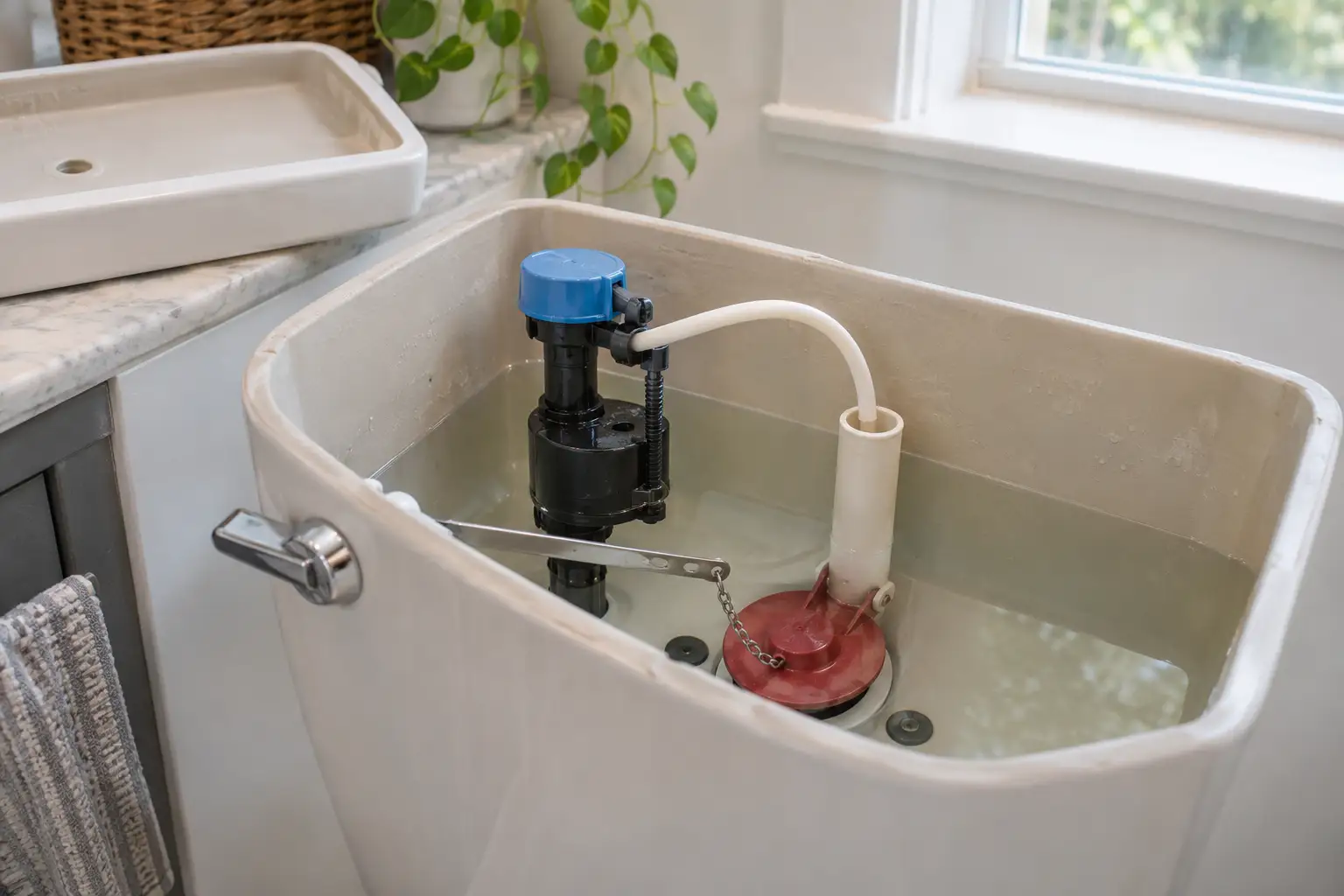
A toilet that keeps running, backs up with every flush or leaves a puddle on the floor wears on a household fast, especially when it is the only one in the house. Call us for toilet repair in Cheyenne, WY and a local technician can come out to find out why it is acting up and fix it, from a worn flapper to a failed wax ring.
First steps when a toilet misbehaves
Whatever the toilet is doing, stopping the water comes first. Then you can figure out whether this is a quick fix or a call.
Close the valve behind the toilet
The small oval handle on the wall or floor near the base turns clockwise to stop water to the tank. If it will not turn, lift the float in the tank to stop the fill.
Do not flush again
If the bowl is full or rising, a second flush sends more water over the rim. Wait for the level to drop.
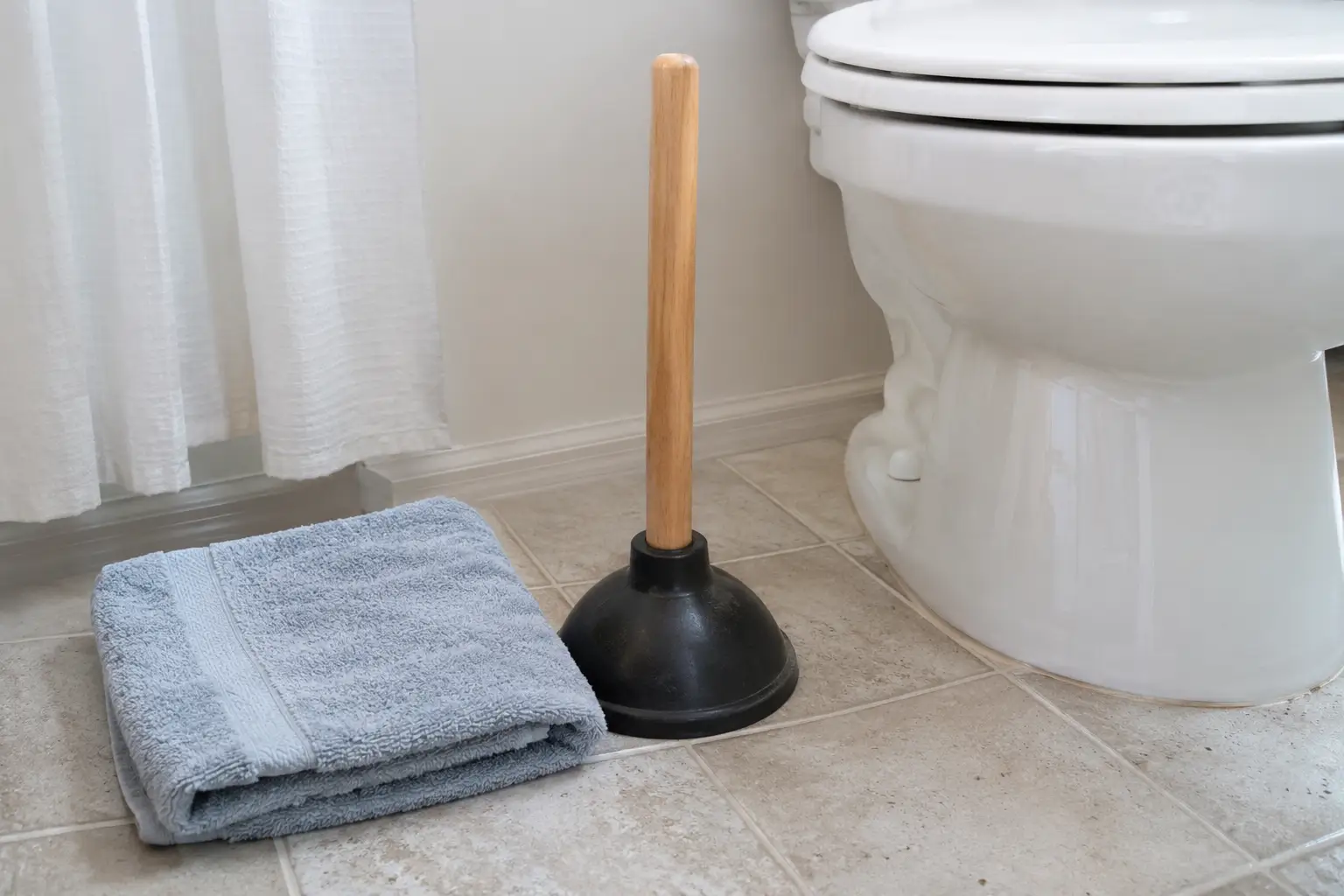
Try a flange plunger
A plunger with a soft sleeve on the bottom seals into the toilet drain. Push down gently first, then work it firmly a dozen times.
Call Plumber Cheyenne
If the clog will not clear, water keeps showing up at the base, or the tank keeps refilling, tell us what you see. A local technician can come out to repair it.
Skip the chemical drain cleaner
It rarely clears a toilet clog, it can damage old pipes and it makes the job risky for whoever works on it next. If you already poured some in, say so when you call. For a bowl spilling over, read what to do when a toilet overflows.
What toilet repair in Cheyenne covers
If the toilet is fine but every drain in the house is slow, the trouble is likely further down the line. Drain cleaning or a sewer camera inspection is the better place to start.
How urgent is it?
Act right away
- The bowl is overflowing and will not stop. Close the valve behind it and call.
- Sewage comes up in a tub or floor drain when you flush. Stop using water and call. The main line may be blocked.
Get it seen today
- Water seeps out around the base after each flush. The seal under the toilet has failed.
- The only toilet in the house is clogged. Worth a visit soon rather than living without it.
Can wait a few days
- The tank refills on its own every so often. A worn flapper. Annoying but not urgent.
- The flush feels weak or needs two tries. Book a visit when it suits you.
Running toilets and weak flushes
A running toilet wastes more water than most dripping faucets, and you often hear it as a soft hiss or a short refill in the middle of the night. The fix usually lives inside the tank.
What makes a toilet run
- Worn flapper. The rubber seal at the bottom of the tank warps or hardens and lets water slip into the bowl.
- Chain trouble. A chain that is too short holds the flapper open, and one that is too long can tangle under it.
- Float set too high. Water rises above the overflow tube and drains away nonstop.
- Tired fill valve. The valve does not shut off fully and keeps feeding the tank.
Why a flush goes weak
A weak flush usually means not enough water is reaching the bowl, or it cannot get out fast enough. Mineral buildup can block the small rim holes under the edge of the bowl. A low tank level, a flapper that closes early or a partial clog in the trap all cut the flush short. A blocked roof vent can also make toilets gurgle and drain slowly.
Clogged toilet, and when to stop plunging
Most clogs come from too much paper at once, wipes labeled flushable, cotton swabs or a small toy. A good flange plunger clears many of them. If ten or fifteen firm plunges do nothing, stop. More force can crack the wax seal under the toilet.
The technician uses a closet auger, a cable made for the curved trap inside a toilet, to reach the blockage without scratching the bowl. If something solid is stuck, the toilet may need to come off the floor so it can be pushed out from below.
A toilet that clogs over and over, even with normal use, is telling you something. It may be an older low volume model, a partial blockage in the trap or a problem in the drain line beyond it.
Water around the base and a rocking toilet
The toilet sits on a wax ring that seals it to the flange, the fitting that connects to the drain pipe in the floor. When that seal fails, water and sewer gas escape every time you flush. You might see a damp ring on the floor, stained grout, a soft spot in the flooring or a stain on the ceiling below.
A toilet that rocks is often the cause. Each wobble squeezes and breaks the wax seal a little more. Tightening the bolts harder can crack the porcelain, so the fix is to pull the toilet, check the flange, put in a new seal and set it level with new closet bolts. If the subfloor has gone soft from a long slow leak, that needs attention before the toilet goes back down.
Check where the water comes from
Dry the floor and the outside of the tank, then wait. Drops on the tank that gather in hot humid summer weather are condensation. Water from the bolts under the tank is a tank to bowl gasket. Water only at the base after a flush is the wax ring.
Repair the toilet or replace it
| Problem | Usually repaired | When replacing makes sense |
|---|---|---|
| Running water | New flapper, fill valve or chain | Parts for an old model are hard to find |
| Leak at the base | New wax ring and bolts, flange repair | The bowl itself is cracked |
| Weak flush | Clean rim holes, adjust the tank, clear the trap | An older model that clogs even when working right |
| Leaking tank | New tank to bowl gasket or bolts | A crack in the tank or bowl porcelain |
| Rocking | Reset on a new seal, shim and secure | Floor damage means the toilet has to come up anyway |
If you do replace a toilet, a WaterSense labeled model uses less water per flush while still clearing the bowl well. The technician can set the new toilet on a fresh seal and connect a new supply line and shut off valve at the same time.
What happens during the visit
- Look and listen. The technician checks the tank parts, the flush, the base and the floor around it.
- Find the cause. Dye in the tank, a dry floor test or a closet auger shows whether it is a part, a seal or a clog.
- Explain the options. You hear what is wrong and whether a repair or a new toilet makes more sense. Nothing is done until you choose.
- Fix it. Worn parts are replaced, clogs cleared or the toilet reset on a new seal.
- Test it. Several flushes confirm a strong flush, a full refill, a quiet tank and a dry base.
Questions to ask and habits that help
- Was this a worn part, or is something about the toilet or the drain causing it?
- Is the floor under the toilet solid, or did a slow leak soften it?
- Should the shut off valve and supply line be replaced while the water is off?
- Would a newer toilet clog less in this bathroom?
A few habits keep toilets out of trouble. Flush only toilet paper, whatever a wipes package says. Keep a flange plunger next to each toilet so a clog gets handled before it overflows. Test the flapper with food coloring a couple of times a year, and turn the shut off valve now and then so it is not stuck on the day you need it. The emergency checklist covers what to do while you wait for help.
Questions people in Cheyenne ask
Why does my toilet keep running?
Usually the flapper at the bottom of the tank is worn, the chain is the wrong length, the float is set too high or the fill valve no longer shuts off. Each of these is a common repair. Put food coloring in the tank to see if water is slipping into the bowl.
How do I stop a toilet from overflowing?
Close the shut off valve on the wall behind the toilet by turning it clockwise. If it will not turn, take the tank lid off and lift the float to stop the fill. Do not flush again until the bowl level has dropped.
Why is water leaking around the base of my toilet?
The wax ring that seals the toilet to the drain has most likely failed, often because the toilet rocks. It can also be a cracked flange or loose bolts. The toilet needs to come up and be reset on a new seal, not just caulked.
Is it bad if my toilet rocks?
Yes. Every wobble breaks the wax seal a little more, which lets water and sewer gas escape under the toilet. Do not overtighten the bolts, since that can crack the porcelain. Resetting it on a new seal and leveling it fixes the problem.
Why does my toilet clog so often?
Common reasons are too much paper at once, wipes, an older low volume toilet, mineral buildup in the rim holes or a partial blockage in the trap or drain line. If more than one drain is slow, the problem may be in the main line.
Can a cracked toilet tank be repaired?
A crack in the porcelain cannot be fixed reliably and can split without warning, so the tank or the whole toilet should be replaced. Leaks at the bolts or the gasket between the tank and bowl, though, are repairable.
Toilet repair for every Cheyenne home
We take calls from homes across Cheyenne in 82001, 82007 and 82009, whether it is a single bathroom bungalow or a house with three toilets. Tell us your street and what the toilet is doing when you call.
ZIP codes 82001, 82007, 82009