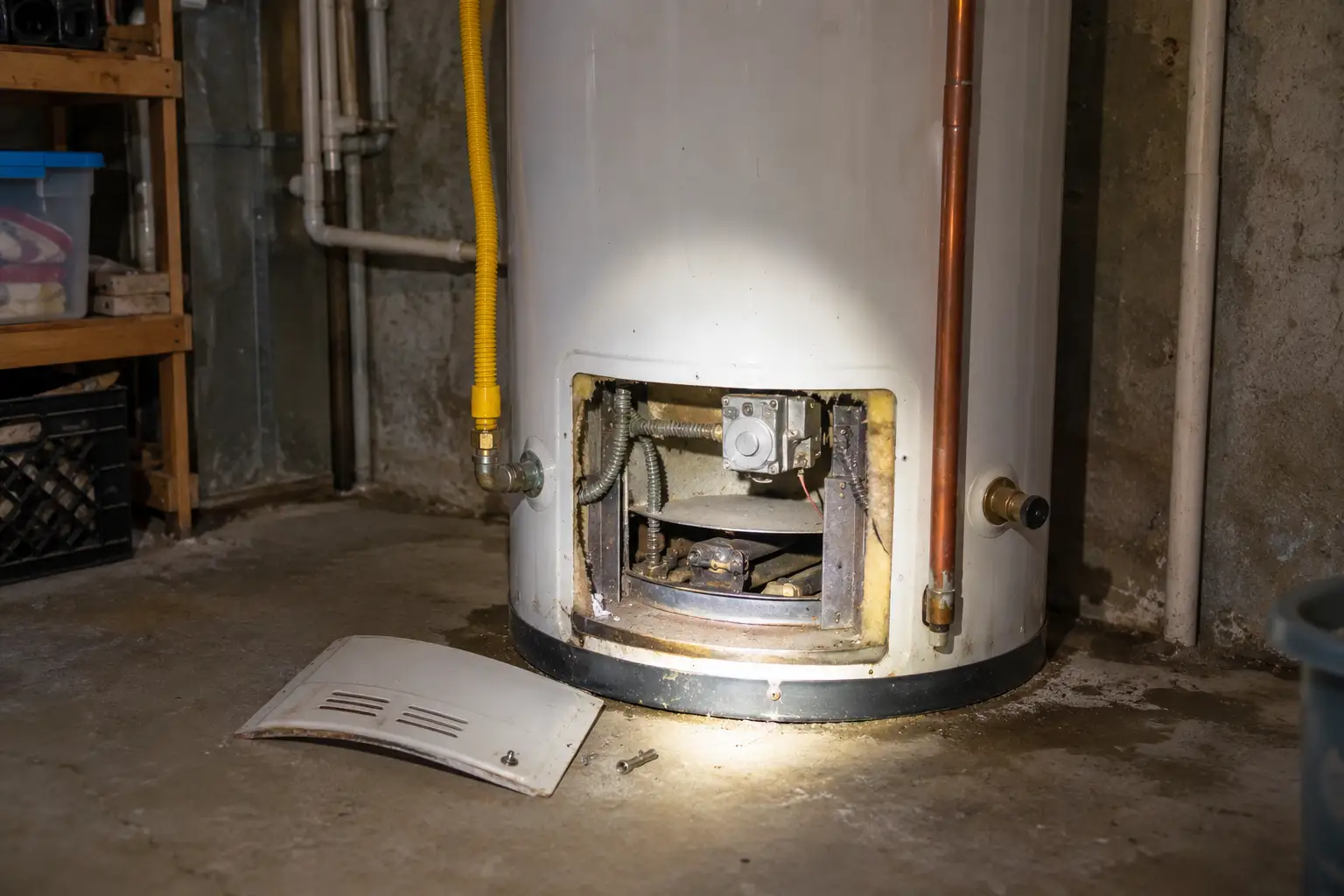
A cold shower on a January morning gets attention fast. Most tank heaters that stop making hot water have one failed part, such as a pilot assembly, a heating element or a thermostat, and can be put right. A tank that is leaking from its body is another story. Call us for water heater repair in Cheyenne and a local technician can come out, find what failed and explain whether a repair or a new heater makes more sense.
Quick checks when the hot water quits
Spend two minutes on these before you call. They either solve the problem or give the technician a head start.
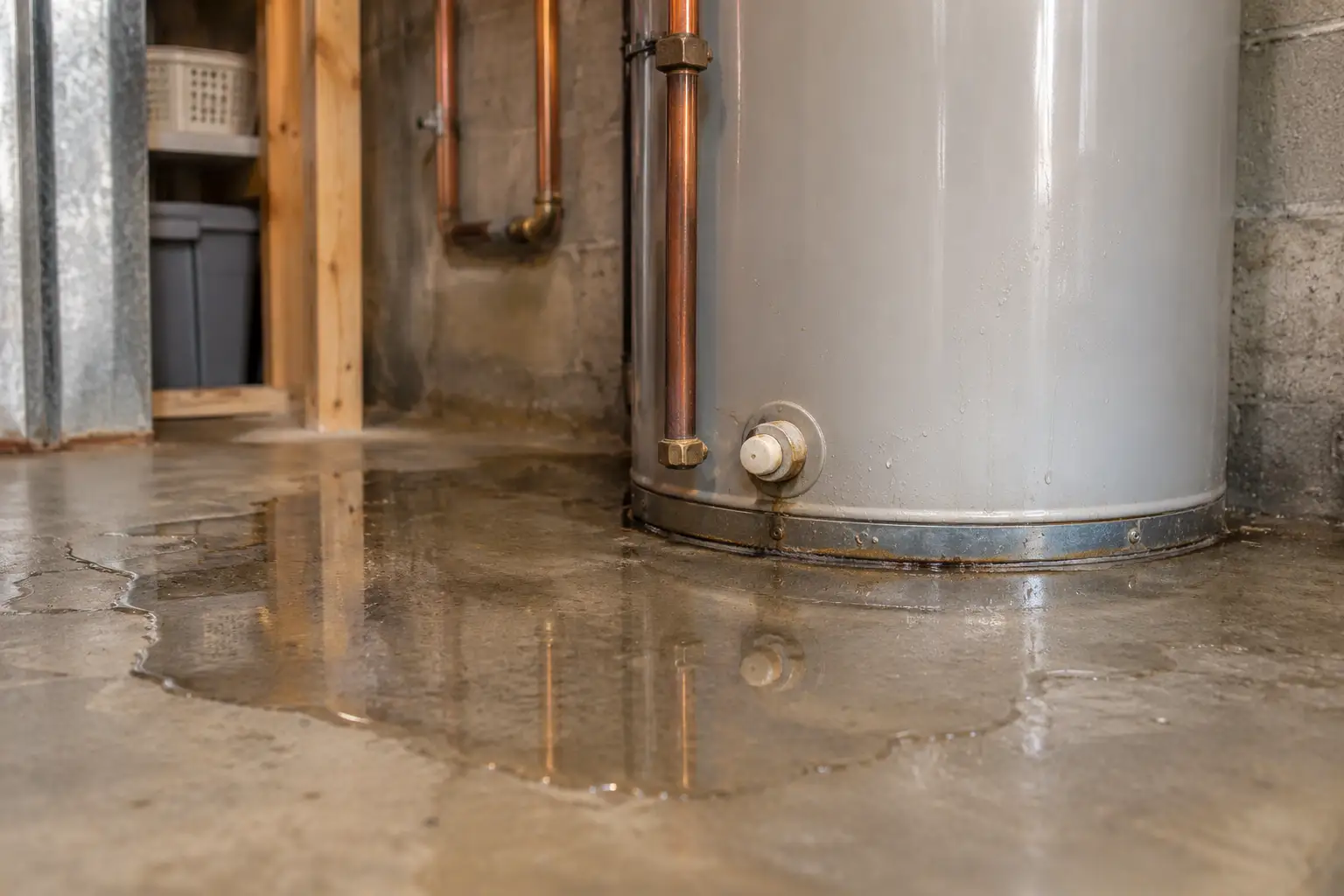
Look at the floor around the tank
Water on the floor changes everything. If you see a puddle, close the cold water valve on the pipe going into the top of the heater and turn the heater off before anything else.
Gas tank? Check the pilot window
Many gas heaters have a small sight glass near the bottom, or a status light on the control. No flame, or a blinking code, tells you the burner is not firing.
Electric tank? Check the breaker once
Water heaters usually have their own double breaker. If it tripped, reset it one time. If it trips again, leave it off, because something inside is shorting.
Call Plumber Cheyenne
Tell us whether the heater is gas or electric, roughly how old it is, and what you saw. A local technician can come out with the right parts in mind.
Hissing relief valve, scorching smell or gas odor
If the relief valve on the side of the tank is hissing or spitting hot water, or you smell scorching, turn off the gas valve on the heater or the breaker. Never cap or plug a relief valve. If you smell gas, leave the house now, do not touch switches, and call 911 or the gas company emergency number from outside.
What water heater repair covers
Water heater repair covers the parts that light, heat, protect and drain the tank. The technician tests each one in order instead of swapping parts until something works.
Gas and electric tanks fail differently
The same complaint can have a different cause depending on how the heater makes heat. This table is a starting point, not a diagnosis.
| What you notice | Likely cause on a gas tank | Likely cause on an electric tank |
|---|---|---|
| No hot water at all | Pilot out, worn thermocouple or a failed gas valve. | Tripped breaker, burned out upper element or a failed thermostat. |
| Hot water runs out quickly | Sediment covering the burner end of the tank, or a broken dip tube. | A burned out lower element, so only the top of the tank heats. |
| Water not quite hot enough | Thermostat set low or a burner firing weakly. | One thermostat set low or one element failing. |
| Rumbling or popping | Sediment on the tank bottom boiling in small pockets. | Scale building up around the lower element. |
| Rotten egg smell from hot taps | The anode reacting with the water. | The anode reacting with the water. |
| Rusty hot water | The anode is used up and the tank lining is corroding. | The anode is used up and the tank lining is corroding. |
Not sure which kind you have? A gas heater has a flue pipe rising from the top and a gas line with a valve near the bottom. An electric one has a cable going into a box on top and two small covered panels on the side. The guide on why a water heater stops working goes deeper into each cause.
A leaking tank usually means replacement
Where the water comes from decides what happens next. Drips from the pipe fittings on top, a weeping drain valve, or water from the relief valve discharge pipe are all parts that can be repaired or replaced.
Water seeping from the body of the tank itself, or from under the bottom edge, means the steel tank inside has rusted through. That cannot be patched. The heater needs replacing, and until then the water and power or gas to it should stay off.
Water from the relief pipe is a different warning. The valve opens when temperature or pressure inside gets too high, so the cause has to be found, not just the valve changed.
Signs the water heater needs a look
Act right away
- Gas smell near the heater. Leave the house and call from outside.
- Relief valve hissing or spraying. Turn off the gas or the breaker and call.
Get it seen today
- Water pooling under the tank. Close the cold inlet valve and turn the heater off.
- No hot water anywhere in the house. Check the pilot or breaker once, then call.
Can wait a few days
- Rumbling during heating. Sediment is building up. Book a flush.
- Hot water running out sooner than it used to. Often an element or sediment problem.
Replacement and water heater installation
When the tank is leaking, or the heater is old enough that one repair will be followed by another, the technician can talk through replacing it. Water heater installation is more than setting a new tank in place.
- Sizing the new heater to how many people shower and how much hot water the house really uses.
- Gas heaters vented correctly, with the flue sloped up and sealed at every joint.
- A new relief valve with a discharge pipe running down to within a few inches of the floor.
- An expansion tank where the plumbing calls for one, so pressure has room when the water heats.
- Shut off valves on the water lines and a drain pan where a leak could do damage.
- The thermostat set around 120 degrees, warm enough for daily use and less likely to scald.
If the house uses a lot of hot water, or space is tight, a tankless water heater may be worth asking about. The technician can explain how it compares with a tank for your home before you choose.
Emergency or something that can wait?
Act now
- You smell gas near the heater
- The relief valve is hissing, spraying or the tank is popping loudly
- Water is spreading toward the furnace, outlets or finished floors
- Scorch marks or a burning smell near the burner or the electrical box
Can usually be booked
- Lukewarm water while the heater still runs
- Rumbling with no leak
- A smell from the hot water only
- A slow drip from the drain valve you can catch in a pan
What the technician does on the visit
- Make it safe. Gas, power and water are checked first, and any leak is stopped.
- Test, do not guess. The pilot, thermocouple, gas valve or the elements and thermostats are tested one by one with a meter.
- Explain the options. You hear which part failed, what a repair involves, and whether the tank is near the end of its life. Nothing starts until you decide.
- Repair or replace. The failed part is changed, or a new heater is installed and connected.
- Run it. The tank is filled, the burner or elements are fired, and the hot water is checked at a tap.
Questions to ask and habits that help
- Which part failed, and what made it fail?
- How old is this heater, and is the tank itself in good shape?
- When was the anode last checked, and does it need replacing?
- Is the relief valve working, and does its pipe run where it should?
- Is the thermostat set where it should be for my household?
Flush a few gallons from the drain valve once a year to keep sediment down, and have the anode looked at every few years. Keep boxes and paint cans away from a gas heater so it gets air. Lift the relief valve lever once a year to make sure it moves, and call if it drips afterward. For the full list, see the home maintenance checklist, and keep the emergency checklist handy for the day a tank does let go.
Questions people in Cheyenne ask
Why does my water heater pilot keep going out?
The most common reason is a worn thermocouple, the sensor that keeps the gas valve open while the pilot burns. A dirty pilot tube, a draft near the heater or a failing gas valve can do the same. The technician tests each part rather than guessing.
Can a leaking water heater be repaired?
It depends on where the water comes from. Leaks at the pipe fittings, the drain valve or the relief valve are repairable. Water seeping from the tank body or its bottom means the inner tank has rusted through, and the heater has to be replaced.
Why does my hot water smell like rotten eggs?
The anode rod inside the tank can react with minerals and bacteria in the water and give off that smell. Flushing the tank and changing the anode to a different type usually clears it up. If the smell is also in the cold water, the cause is elsewhere.
How do I know if my electric water heater element is bad?
Hot water that runs out quickly often points to a dead lower element, and no hot water at all to the upper element or its thermostat. A technician confirms it with a meter after switching off the power, since the elements run on high voltage.
Is it safe to turn the water heater back on after a leak?
Only once the source is known. If the leak came from a fitting or valve that has been fixed, yes. If the tank itself is leaking, leave the water, gas and power off until it is replaced, so the leak does not spread.
How long does water heater installation take?
Swapping a tank for a similar one is usually done in a single visit. Moving the heater, changing from gas to electric, or adding venting, an expansion tank or a new gas line takes longer, and the technician can tell you what to expect beforehand.
Water heater service across Cheyenne
We take water heater calls from every part of Cheyenne, for tanks in basements, garages and utility closets. Tell us the heater type and your street when you call.
ZIP codes 82001, 82007, 82009