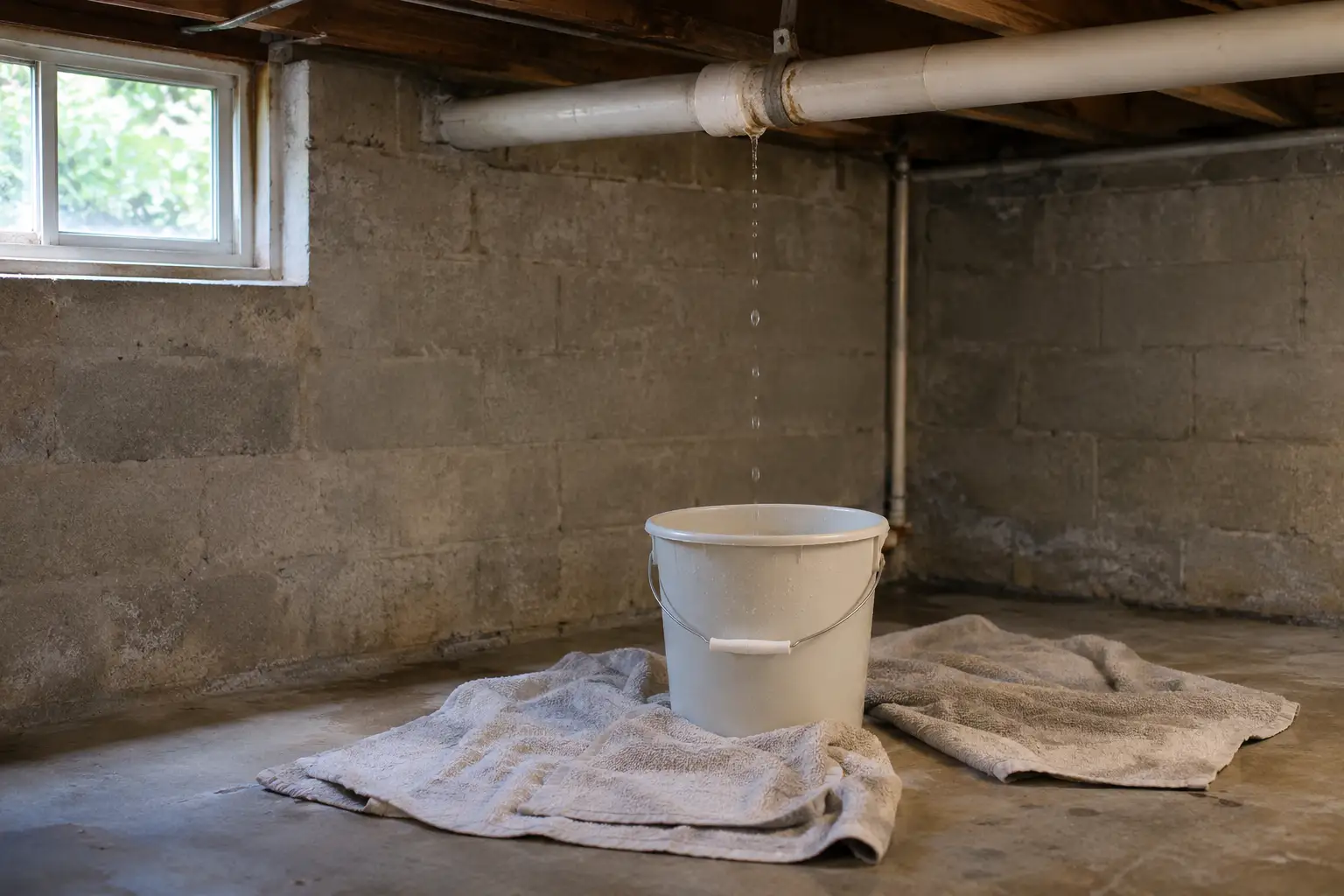
Knowing what to do when a pipe bursts turns a frightening mess into a list of jobs. The first ten minutes decide how much water gets loose, and the next two days decide how much of it stays in your walls and floors. Here is the order that works, from the moment you hear water to the point where the room is dry.
The short answer
Close the main water valve right away. Switch off power to any wet area from a dry spot. Open the lowest faucet to drain the pipes, then call us. Photograph everything before you clean up, and start drying the room the same afternoon.
What to do in the first ten minutes after a pipe bursts
Speed matters here more than neatness. A broken supply line can put out several gallons a minute, and it keeps going as long as the main is open.
Stop the water at the main
Turn a wheel handle clockwise until it stops, or turn a lever a quarter turn. If you are not sure where it is, the guide on shutting off your water shows the usual spots.
Deal with electricity
If water has reached outlets, cords, a light fixture or the electrical panel, switch off that circuit at the breaker. Only do this from a dry place. If the panel itself is wet, stay out and call for help.
Drain the lines
Open a faucet on the lowest floor and leave it running until it stops. Flush a toilet once if you like. This empties the water still sitting in the pipes.
Call Plumber Cheyenne
Tell us where the water came from, whether it has stopped, and what kind of pipe you can see. A local technician can come out to find the break and handle the burst pipe repair.
The first hour after the break
Once the water is off, the job changes from stopping damage to recording it and limiting it.
- Take photos and video first. Get the break, the water on the floor, the ceiling, and anything that got wet. Wide shots and close ups both help an insurance adjuster.
- Move belongings out. Rugs, boxes, electronics and furniture go to a dry room. Put foil or wood blocks under furniture legs that cannot move.
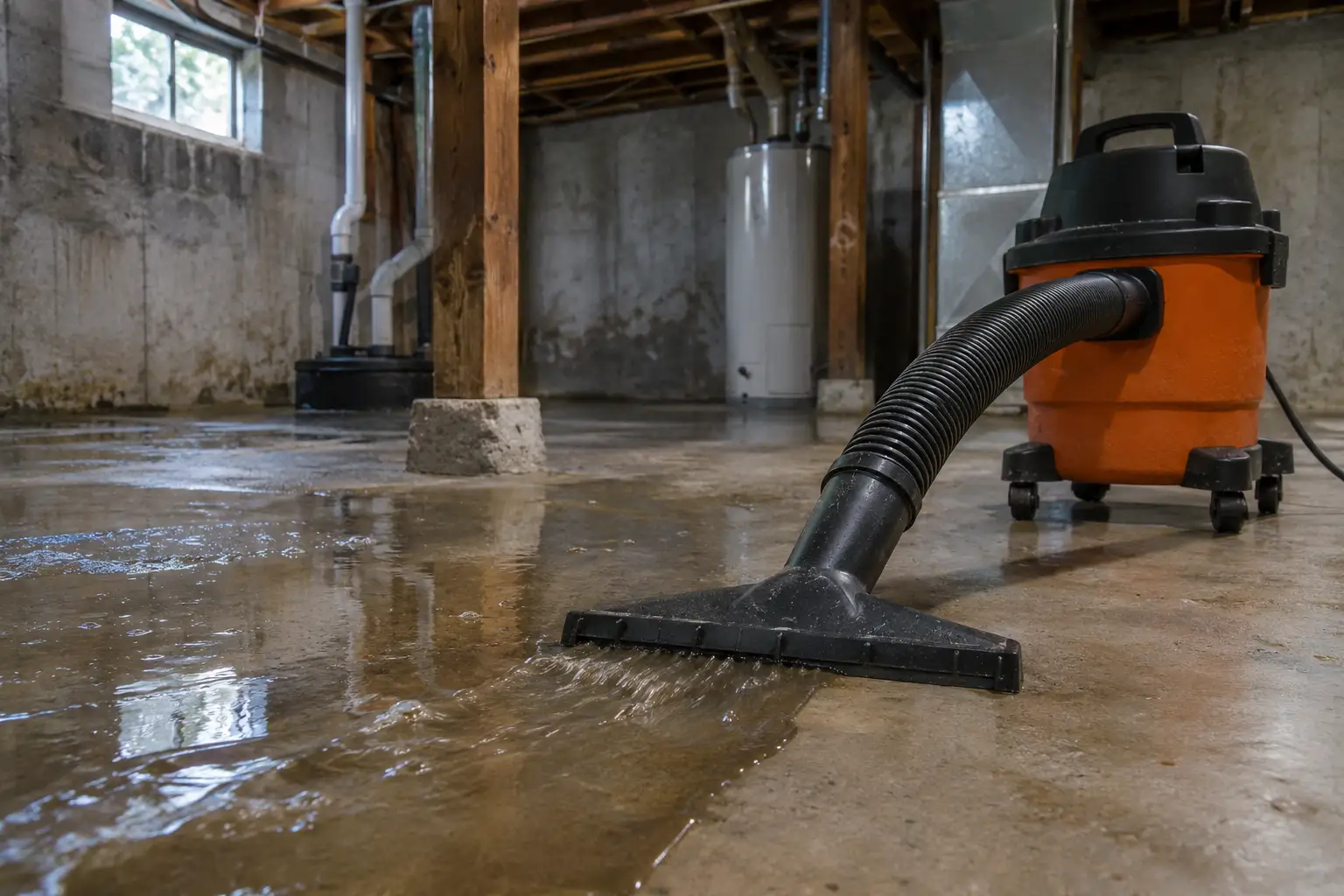
- Remove standing water. A wet vacuum, mops and buckets clear the floor. Push water toward a floor drain if you have one.
- Call your insurer. Many policies ask to be told quickly, and some want to see the damage before anything is thrown out.
Keep the broken piece
If the technician cuts out the damaged section, ask to keep it. A split pipe is solid evidence of what happened.
Hours two to twenty four
This is the drying window. The faster wet materials dry, the less you will have to tear out later. Water that sits in drywall, carpet pad and wood framing for more than a day or two becomes a mold problem.
| Material | What to do today | Why it matters |
|---|---|---|
| Carpet and pad | Pull back the carpet and lift out soaked pad, which rarely dries in place. | Pad holds water against the subfloor like a sponge. |
| Drywall | Cut a strip above the water line if it is soaked, so air reaches the cavity. | Wet insulation inside the wall stays damp for days. |
| Wood floors | Wipe up surface water and get air moving across the boards. | Boards swell and cup as they take on water. |
| Ceiling under the break | Poke a small hole at the lowest point of a sagging bulge and catch the water. | A heavy, water filled ceiling can drop without warning. |
| Cabinets | Empty them and leave the doors open. | Particleboard bases swell and fall apart when they stay wet. |
Keep fans and a dehumidifier running without a break, and keep the heat on. In a Cheyenne winter, open windows bring in cold air that can freeze the next pipe, so dry with machines instead.
Why a pipe bursts in the first place
Knowing the cause helps you decide whether one repair is enough or whether other lines are at risk.
In Cheyenne, a freeze split often shows up only when the ice thaws, sometimes a full day after the cold snap. If you had a frozen line, read how to thaw a frozen pipe before you warm it up.
Day two and beyond
Mold can begin growing on damp materials somewhere between twenty four and forty eight hours after they get wet. That is general guidance, and the real pace depends on warmth, airflow and what the material is. Keep checking.
- Press on baseboards and drywall. Soft or crumbly spots are still wet.
- Sniff for a musty smell in closets and behind furniture.
- Check the ceiling below the break for new stains or spreading rings.
- Look at the floor near the wall for cupping or lifting boards.
- Keep the fans and dehumidifier going until everything reads dry to the touch for a full day.
If you suspect water reached places you cannot see, leak detection uses moisture readings to find where it went. The signs of a hidden water leak guide lists what to watch for.
Mistakes people make after a burst
Do this
- Close the main before anything else
- Shut off power to wet areas from a dry spot
- Photograph before you clean or throw out
- Dry with fans and a dehumidifier while the heat stays on
Avoid this
- Walking into standing water near live outlets
- Turning the water back on to test it before the repair
- Wrapping a split with tape and hoping it holds
- Using a household vacuum on wet floors
Tape and clamp kits can slow a pinhole for an hour, but none of them hold full house pressure on a split. Leave the main closed until the line is properly repaired.
What happens when the technician arrives
- Find the real source. Water travels along joists and pipes, so the break is not always where the drip shows up.
- Explain what failed. You hear what broke, why, and what the repair involves before any work starts.
- Repair the line. The damaged length of copper, PEX or galvanized pipe is cut out and replaced with matching material.
- Pressure test and restore. The water comes back on slowly, every new joint is checked, and air is bled out at the faucets.
If the house has aging galvanized pipe and this is not the first break, the technician may talk through repiping as an option. You decide what happens next.
Questions people in Cheyenne ask
What is the very first thing to do when a pipe bursts?
Close the main water shut off valve. Everything else, including mopping, calling your insurer and moving furniture, comes after the water stops. If water is near electricity, switch off that circuit from a dry spot right after the valve.
Should I turn off the water heater after a pipe bursts?
If the main will be closed for a while, yes. Turn a gas heater to its pilot or off setting, or switch off the breaker for an electric heater. This keeps the elements and burner from running on a tank that is not refilling.
How fast does mold grow after water damage?
As a general rule, mold can start on damp materials within a day or two. Warm, still air speeds it up. Getting carpet pad out, opening soaked drywall and running fans and a dehumidifier the first day gives you the best chance of avoiding it.
Should I take pictures before cleaning up?
Yes. Photograph the break, the standing water, the ceiling and every damaged item before you move or toss anything. Many insurers ask for this, and it is hard to recreate later once the room is cleaned up.
Can I use the rest of the house while the pipe is broken?
Not while the main is closed. Once the technician isolates or repairs the broken section, the water can usually go back on. Until then, keep a few jugs of water for drinking and flushing.
Why did the pipe burst a day after the cold snap ended?
Ice inside a pipe can plug a crack while it is frozen. When it thaws, water flows through the split and the leak suddenly appears. That is why it pays to check pipes in cold spots as temperatures rise.